-
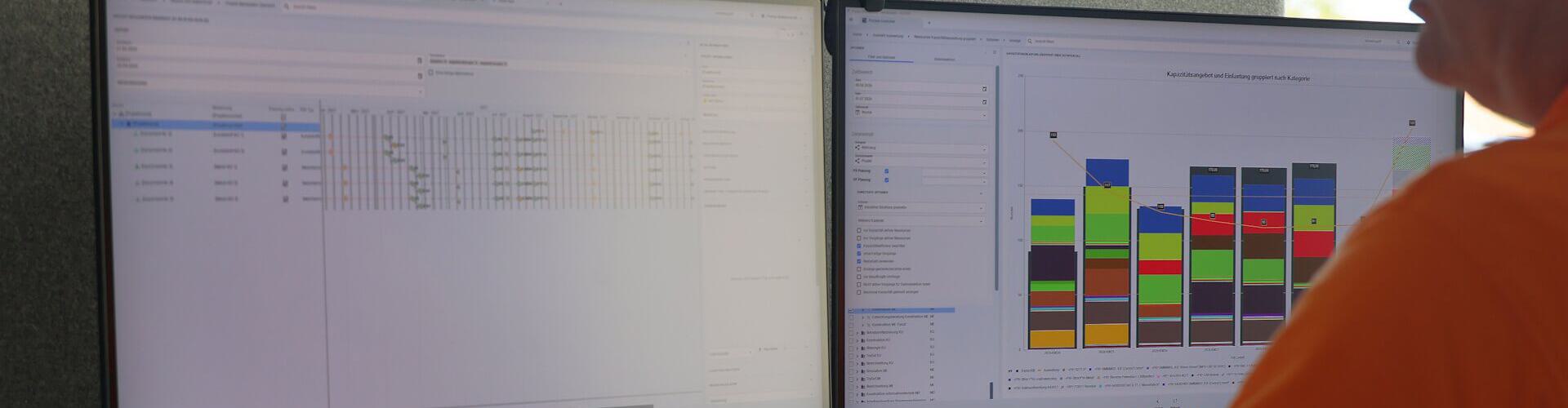
Weidmüller manages the entire manufacturing process with ProLeiS
Company
Weidmüller Interface GmbH & Co. KG
Location
Detmold, Germany
Focus
Products and solutions for electrical connectivity
Automation and digitalization
Planning and construction of tools, equipment, and production systems for manufacturing sites worldwideBenefits:
- End-to-end planning and control of all projects, from the initial product idea to the start of manufacturing
- Cross-functional coordination of die, mold, special machine, and equipment manufacturing
- Real-time transparency about resources, capacity, and project progress
- Prevention of double-booking and planning bottlenecks
- Fast, reliable simulation of changes to planning and priorities
- Standardized templates for scalable, flexible project implementation
- Uniform data foundation
- Seamless collaboration with SAP and external partners
- A centralized, up-to-date source of information for everyone involved
- A high level of planning reliability thanks to transparent processes and dependable real-time data
- Transparent decision-making across all projects and departments
Sector
Electrical engineering
Automation technology
Published
2026

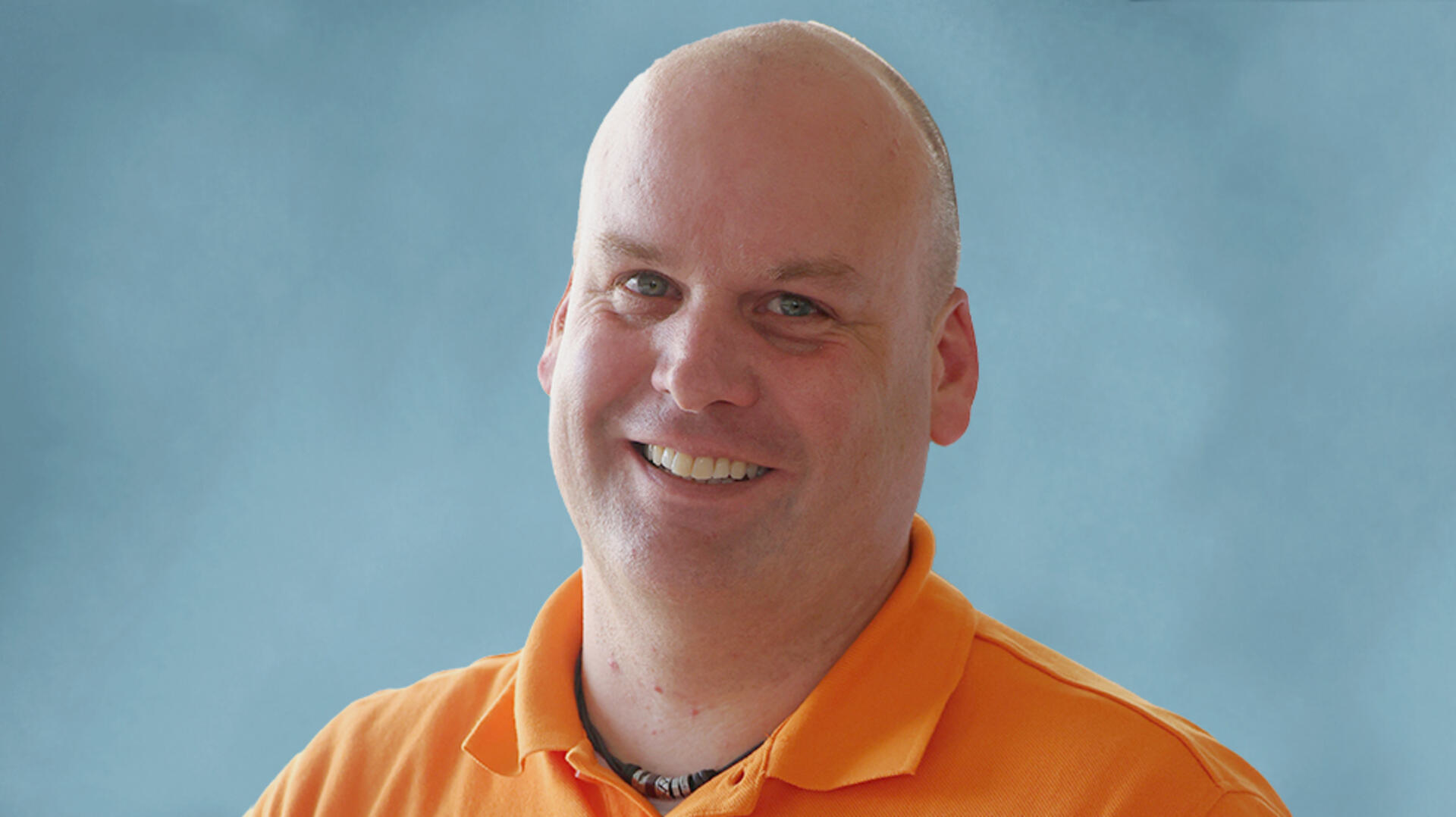
Interviewee: Thomas Siedenkamp, Group Leader Tool Shop Metal
ProLeiS meets our needs almost perfectly. Our work with ProLeiS allows us to grow together, which provides a solid foundation for a strong partnership. ProLeiS has very great advantages, particularly when it comes to planning and managing projects across departments.
Thomas Siedenkamp, Group Leader Tool Shop MetalWeidmüller Interface GmbH & Co. KGProLeiS ensures smooth cross-functional processes at Weidmüller Interface
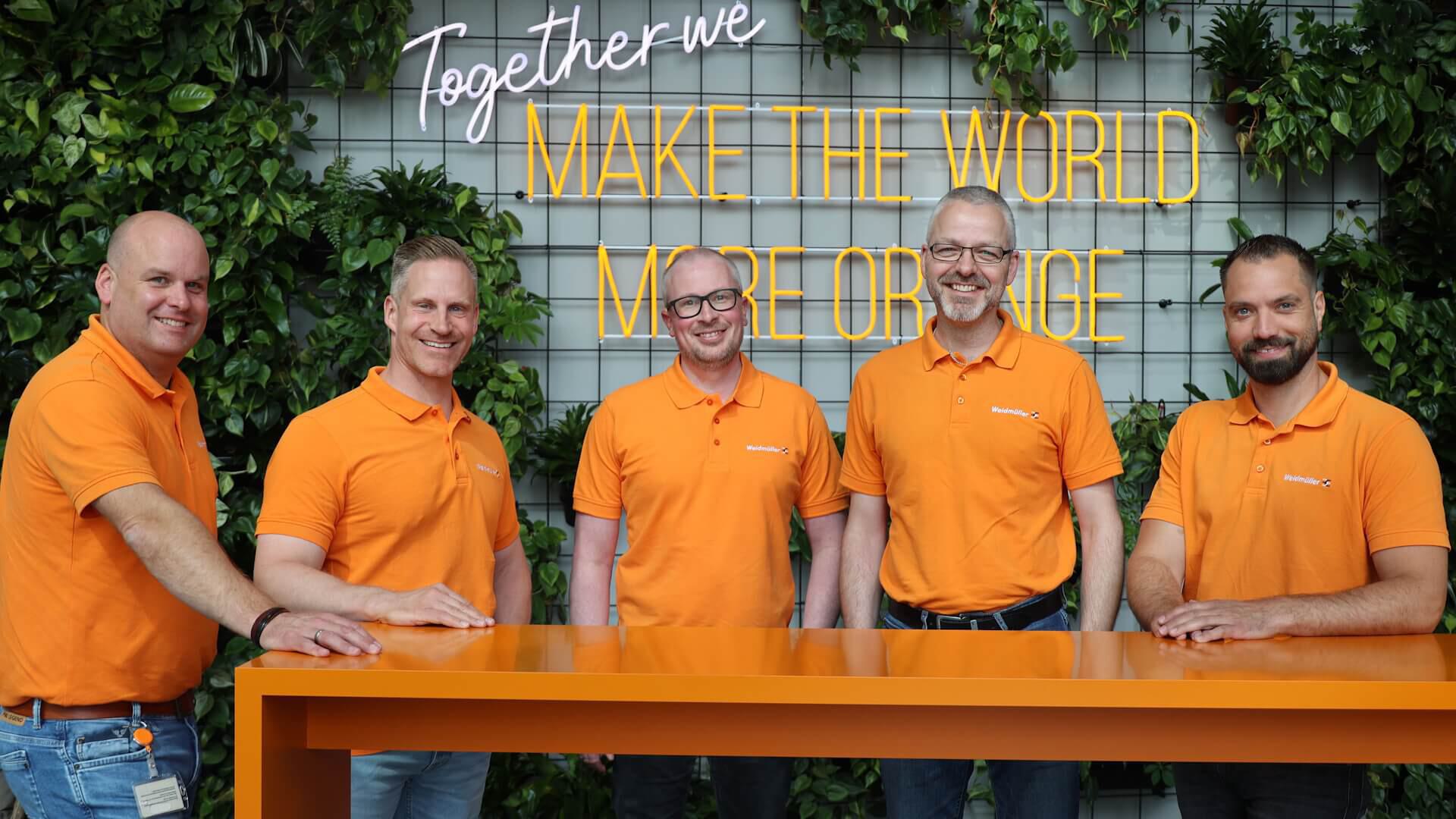
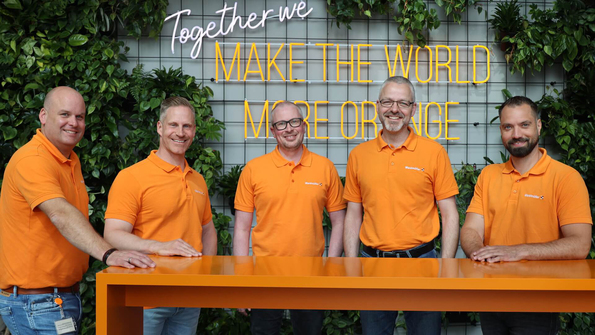 Thomas Siedenkamp (Group Leader Tool Shop Metal) and his team (from left to right), Matthias Noldus (Operating Resource Planner), Jens Delker (Order Manager), Hendrik Brinkmann (Operating Resource Planner), and Maik Tolksdorf (Operating Resource Planner), worked with Tebis experts to successfully get the ProLeiS system up and running at Weidmüller – Image: Pergler Media
Tebis’s ProLeiS PPC software is an established, reliable, efficient manufacturing planning and control tool used in many die manufacturing companies. Its use at Weidmüller in Detmold provides impressive proof that the software can do even more. This year, the company began using ProLeiS to plan and execute all processes at their plants worldwide, from the initial product idea to turnkey manufacturing systems.
Weidmüller, a family-owned company, is a global provider of products and solutions for electrical connectivity, automation, and digitalization. It has established itself as a reliable, innovative partner for industrial applications that require energy, signals, and data to be transmitted securely and efficiently from sensors to the cloud. Weidmüller has about 6,000 employees around the world. About 2,000 of them work at its headquarters in Detmold.
Collaboration among very different departments
One unusual aspect of this company, based in the Ostwestfalen-Lippe region, is the high degree of vertical integration in the manufacturing of its many products. With its tool making capabilities for both plastic molds and metal dies, capacity for a wide range of fixtures and equipment, and extensive special machine manufacturing capabilities, the company can draw on its own resources to build virtually all of the manufacturing systems required for even highly complex components. The various departments work very closely together, with reliable partner companies providing additional support.
This close collaboration is essential: Weidmüller products generally integrate both plastic and metal components. This requires injection molds and stamping or progressive dies, as well as systems and assembly fixtures that are often highly complex and highly automated, in order to combine the individual components into the finished product.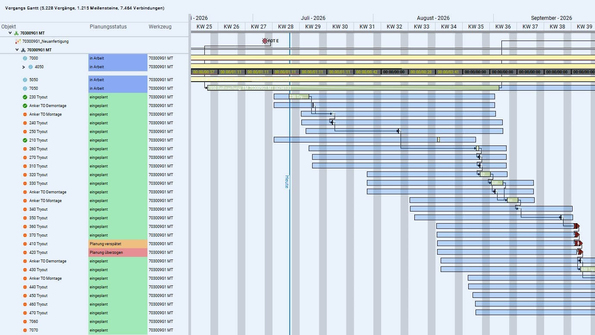 Having to constantly “put out fires” has traditionally been the bane of planners, because it can abruptly throw carefully balanced planning aspects into disarray. ProLeiS makes this much less daunting: If unanticipated tasks pop up, planners can quickly and easily simulate the effects of changes in the system—not only on their own project, but on all the others as well. That provides both a high degree of flexibility and certainty that everything can be kept on track. – Image: Weidmüller
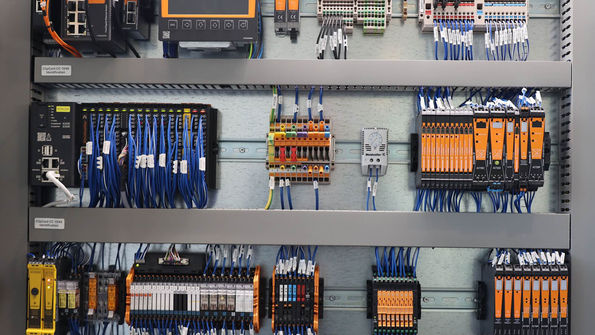 Many Weidmüller Interface products can be found in control cabinets, and this Detmold-based electronics specialist is the first choice for many OEMs in Germany and abroad, particularly for high-quality premium installations. – Image: Pergler Media
Manufacturing planning presents a challenge
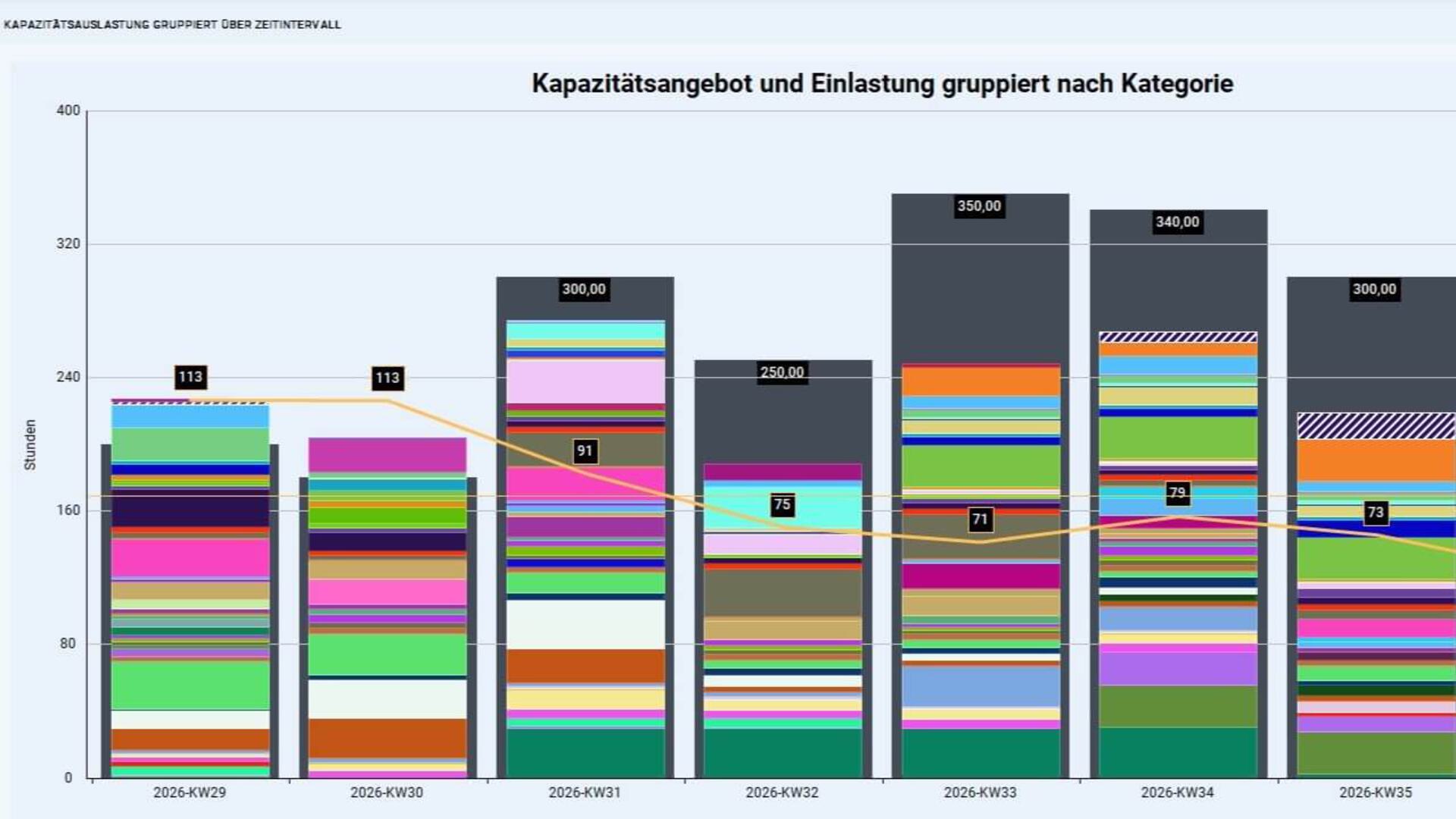
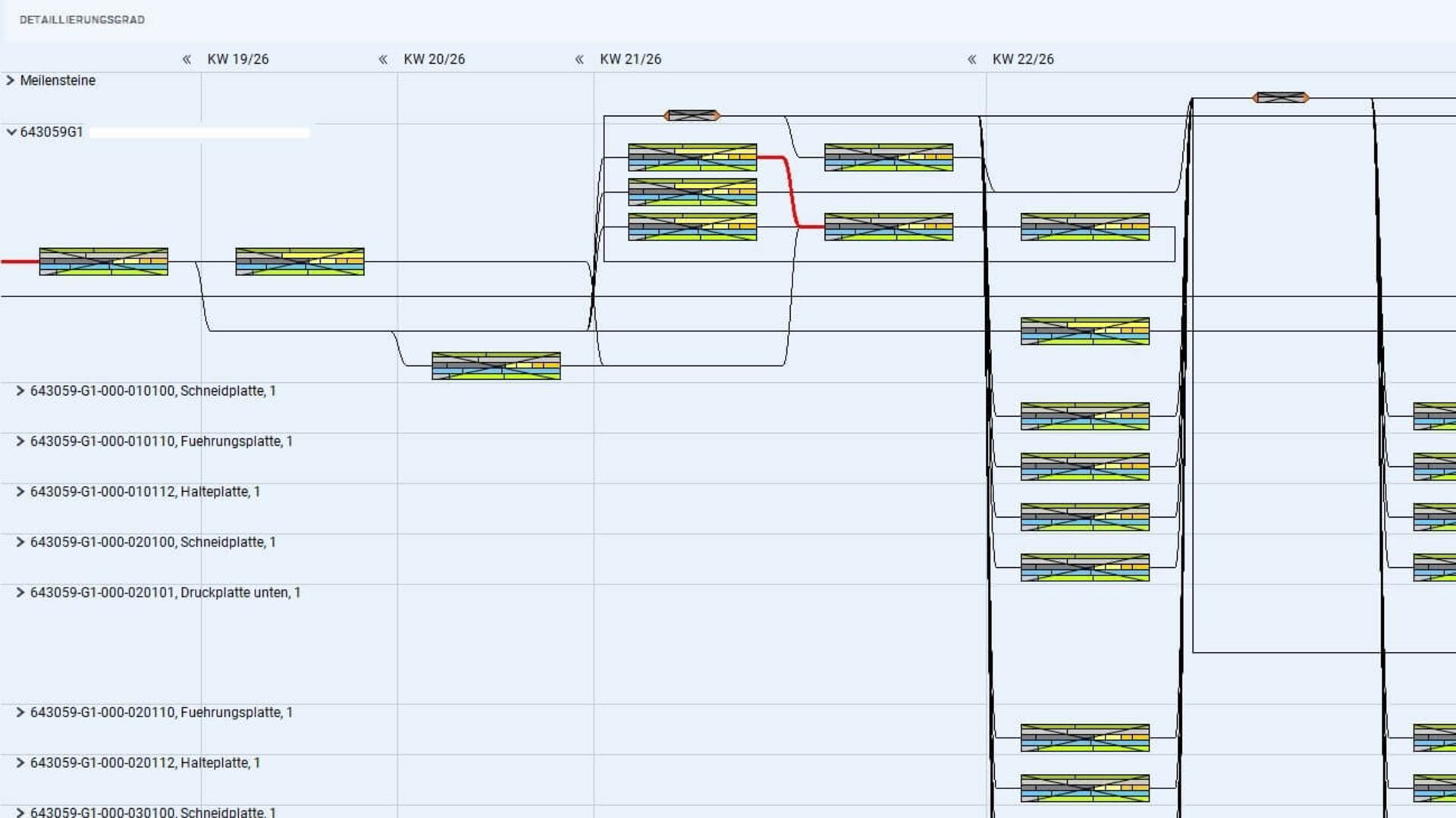
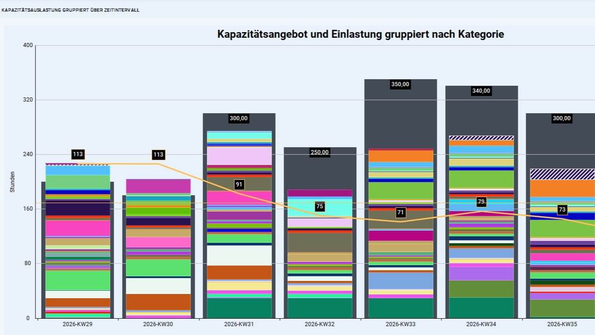 The planners can get an overview of capacity and utilization in real time. This allows them to identify potential bottlenecks well in advance and take highly targeted countermeasures, such as outsourcing, reprioritizing, or switching technologies. – Image: Weidmüller
Planning the manufacturing of all the required equipment is a challenge—determining when each component, each tool, and each special machine needs to be ready in order to ensure smooth manufacturing and continuously readjusting the details.
We always have 30 to 40 such projects running in parallel
explains Thomas Siedenkamp, Group Leader Tool Shop Metal at Weidmüller. “For a finished product to ultimately reach the warehouse, the timing has to be coordinated for all the machines and equipment. Every step matters. You can’t machine a part if the material isn’t there, and you can’t complete final assembly unless all the individual parts have first been manufactured and made available.” The key to smooth manufacturing at Weidmüller plants worldwide lies in careful manufacturing planning, taking all of the company’s resources into account. “If you look at just one department—such as the metal tool shop, which I head—the manufacturing management requirements aren’t very different from those of other conventional tool making operations,” says Siedenkamp. “But when you also need end-to-end coordination of all the individual departments, from the initial product idea to the start of manufacturing on a new manufacturing line at one of our plants, the challenges multiply.”
Software is essential
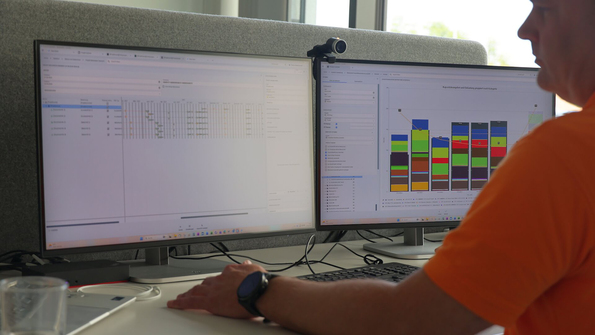 One of the challenges at Weidmüller for ProLeiS is that 25 planners from different departments need access to the same resources. The software package’s strict tree structure prevents problems like double-booking of specific resources. – Image: Pergler Media
Cross-functional synchronization of manufacturing planning is a key lever for efficiency and transparency. “Until last year, we were still building on an established system landscape,” Siedenkamp recalls.
But we recognized that even greater data integration and consistency could further improve our processes.
Against this background, it became clear how important it is to have a uniform, up-to-date overall view for ongoing refinement and optimization of planning.
For instance, with the old system, existing resources would sometimes be double-booked, resulting in an unplanned manufacturing standstill in at least one department. Rapid replanning—for example, when project priorities changed—was also very challenging because of the lack of transparency. And there was always a risk that replanning would have unexpected consequences for other projects, which would simply not be on individual planners’ radar, since they can’t be expected to keep track of the entire manufacturing process.Exploiting untapped potential
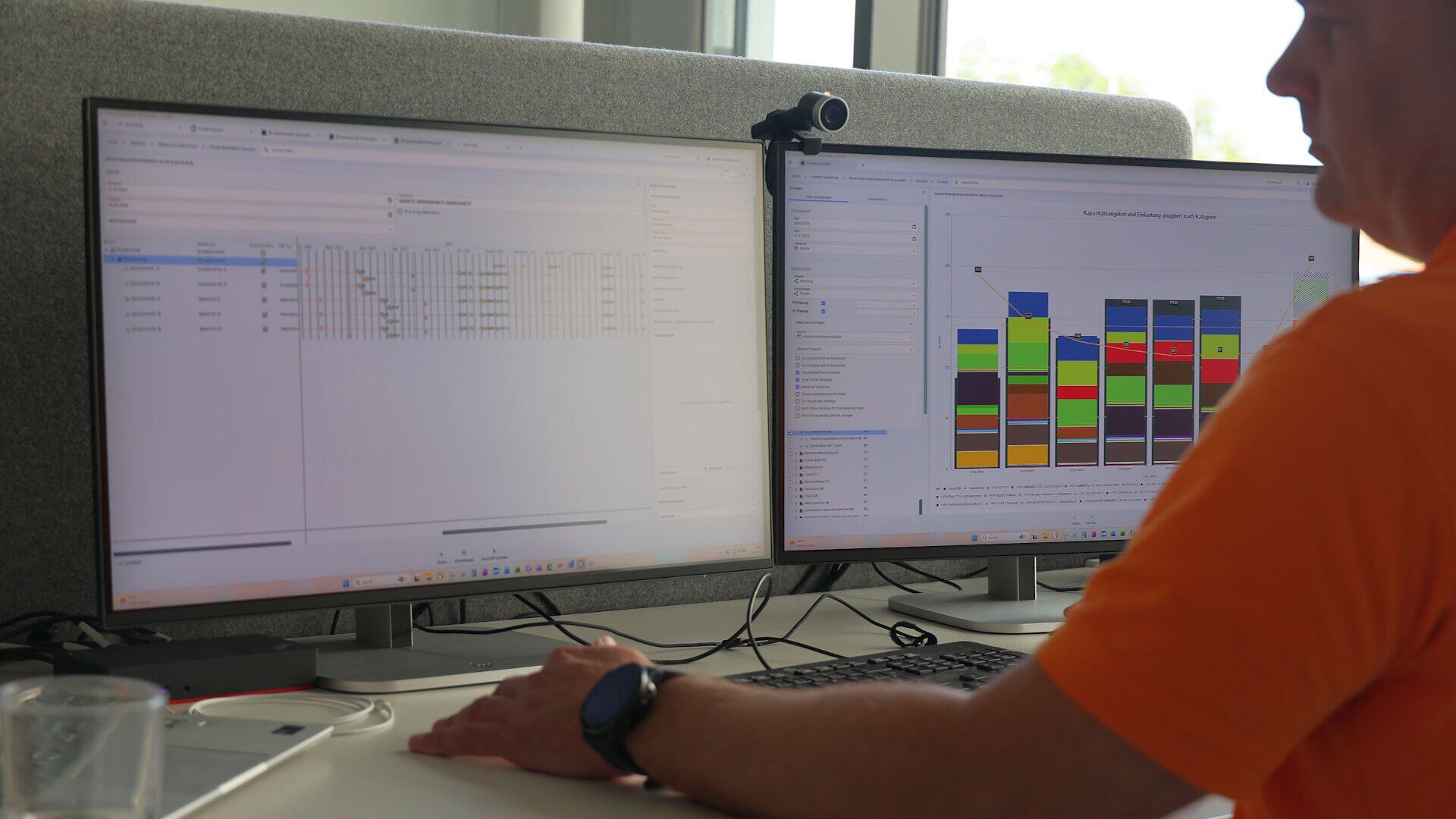
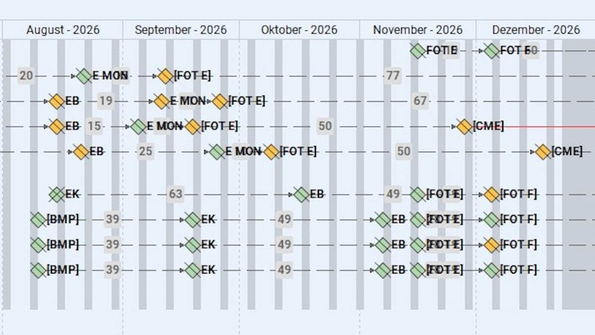 ProLeiS provides real-time information about how far a project has progressed and what the next steps are. Around 170 employees can retrieve all the up-to-date information they need from ProLeiS to complete their tasks smoothly— without the nagging concern that the data they’re using might be out of date. – Image: Weidmüller
To exploit new potential in manufacturing planning and bring new perspectives and fresh ideas to the company’s ongoing development, Weidmüller drew on the expertise of a renowned external partner: Together with productivity experts from RWTH Aachen University’s WBA Tooling Academy, a project team scrutinized manufacturing workflows and processes from a holistic perspective.
As part of the continuous refinement of its manufacturing processes, Weidmüller focused even more on standardization, as well as planning and controlling processes. As the complexity and demands increased, it became clear that the system landscape needed to take the next evolutionary step to further increase transparency and consistency. At the same time, seamless integration with the company-wide SAP system became increasingly important as a way to interconnect processes even more closely and make data available consistently. The goal was to consolidate information more efficiently and provide the foundation for consistently digital and scalable processes.Manufacturing planning and control are crucial
“Here too, we were able to rely on the extensive expertise of our partners at WBA,” recalls Siedenkamp. “With their methodical, scientific, industry-specific consulting approach, they scoured the market for suitable systems for us. From around 20 software solutions, four or five systems quickly stood out as candidates for the next stage of evaluation.”
In the end, two finalists remained: Tebis’s ProLeiS PPC software and another system that is also widely used in the die and mold manufacturing industry.Ultimately, ProLeiS scored very high in a head-to-head comparison on all criteria and had very significant advantages especially for cross-functional project planning and management
emphasizes Siedenkamp. “The way the tree structure is consistently implemented in ProLeiS promises scalability with a high degree of transparency. And Tebis has a very good reputation in the industry for both its products and its service. In addition to a software package that can meet our needs, it’s important for us to have knowledgeable partners who support us not only during implementation but also in day-to-day manufacturing.”
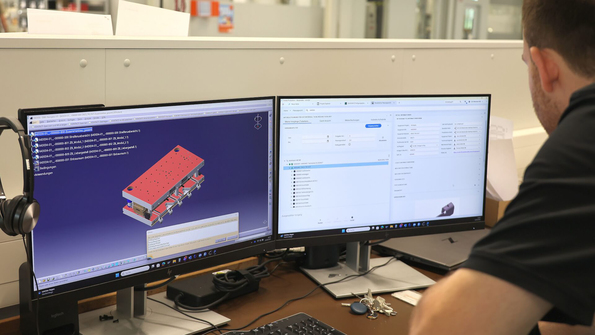 Tool and die makers working in the assembly area can consult ProLeiS and retrieve all the up-to-date information relevant for their specific tasks on specific tools. Every data record now exists in only one valid version everywhere in the company, and it’s available for all operations. – Image: Pergler Media
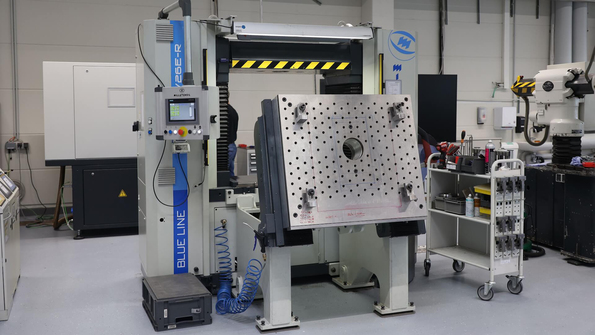 The new transparency ProLeiS offers also revealed unexpected potential in certain places. For example, there had been a great deal of reworking that was not even being taken into account. The improvements earlier in the process that this insight allowed have significantly reduced the number of tryout loops. – Image: Pergler Media
Rapid implementation thanks to optimal preparation
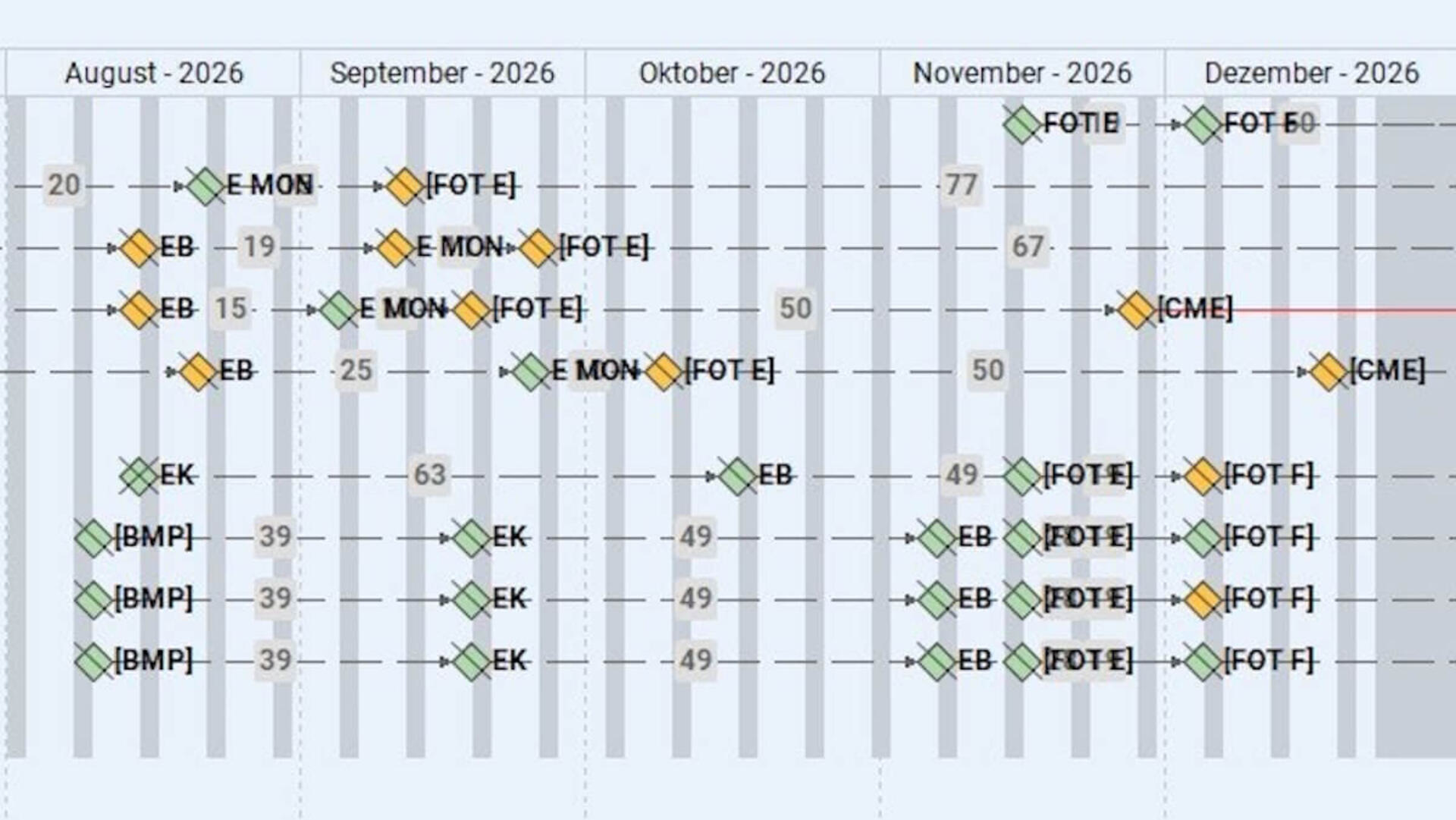
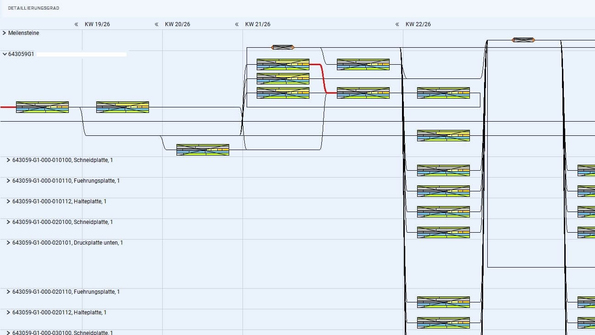 The templates contain all the standard parts together with their required operations, resources, and qualifications. These standards can be adapted to the exact requirements of the specific workpiece with just a few parameters. Time dependencies are also taken into account: For example, a workpiece has to undergo hardening before it can be hard milled. – Image: Weidmüller
For these reasons, Tebis’s ProLeiS PPC software was the clear choice. The company chose the beginning of 2026 to start the rollout.
We went live with ProLeiS in January—our goal was to minimize the amount of time when the two planning environments would exist side by side
explains Siedenkamp. “A few legacy projects were still being handled in the old system, but everything else was already running through ProLeiS.”
Naturally, there were some unexpected complications at the beginning. “We would’ve been very surprised if not—after all, ProLeiS is a much more complex and far more powerful software system than an office suite, for example,” explains the experienced planner. “But thanks to excellent preparatory work with the WBA experts, thorough ProLeiS training, and ongoing support from the ProLeiS specialists—both online and on site—these initial ‘growing pains’ were kept to a minimum. And very early on, ProLeiS was already giving us a clear, reliable, end-to-end view of the planning.”
ProLeiS for complex planning structures with many planners
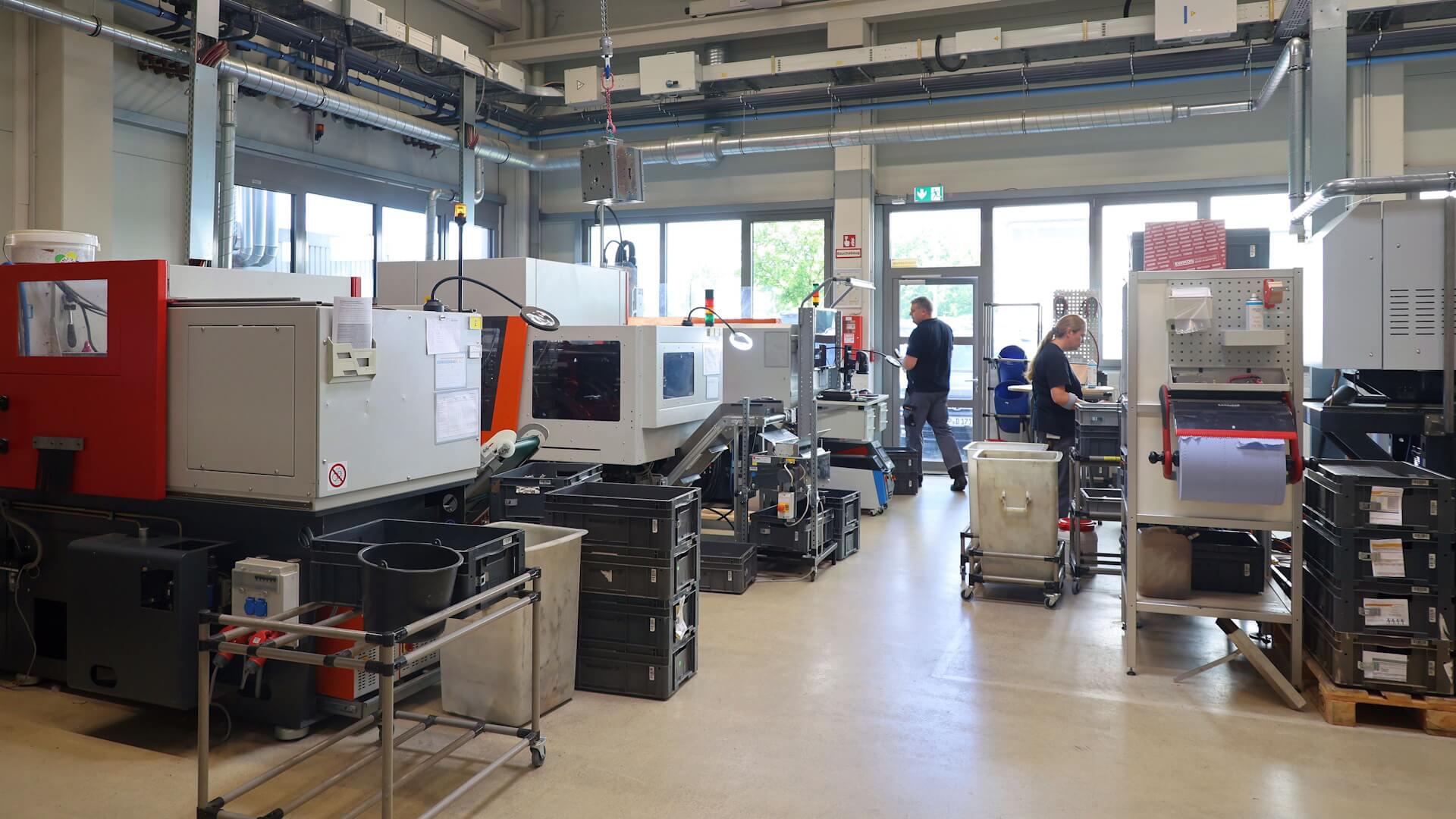
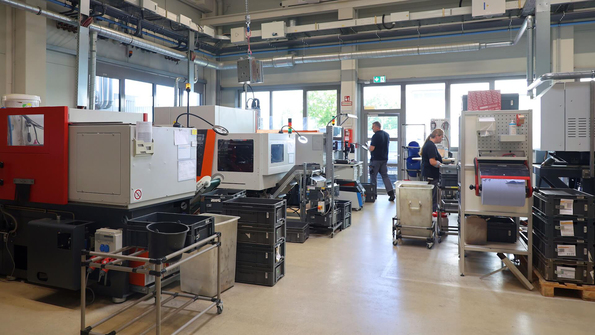 ProLeiS is now used for planning and allocation of all resources. Employees at the machines get their information from the PPC system. They still have the option of intervening in predefined machining sequences, for example, if this allows machining operations to be optimized. In ProLeiS, they can see whether this could have any consequences and, if so, exactly what they are. – Image: Pergler Media
This was not something Siedenkamp’s team could take for granted.
The requirements we needed ProLeiS to meet are far more complex than those of conventional tool and die making
he explains. “In the various departments, ranging from tool and die making to special machine manufacturing, we have 25 employees with planning responsibility. They need real-time access to resources and processes. And rules have to be set and implemented to determine who is allowed to access what resources in what situations. In total, about 170 employees in our company have access to ProLeiS, with different levels of authorization.”
The company has designated key users to disseminate ProLeiS know-how among all the relevant employees and also serve as the first points of contact for the system. There was also important preparatory work to do: The ProLeiS configuration has to be tailored to a company’s specific needs. Therefore, the first step was to create and fill out templates for Weidmüller’s range of parts, which is mostly standardized. Several employees worked on this, together with the ProLeiS implementation specialists, for months before the planned changeover.Workpieces know their machining steps
These templates contain all the key parameters. We defined standard structures for assemblies, individual parts, and NC components, including the typical machining steps
says Siedenkamp, describing their approach. “Let’s say a particular kind of machine part requires the following work steps: pre-milling, measurement, hardening, EDM, and finish milling. We supplement all these work packages with the associated standard machining times and the resources required for the specific machining operation.”
The standard processes defined in this way can be automatically supplemented with the appropriate machines, tools, equipment, and qualifications. Where templates are possible and make sense for manufacturing, they also allow flexibility in the machining sequence. They automatically take dependencies into account: For example, hard machining can’t happen until the part has been hardened. With logical links like these, templates make working with ProLeiS easier and more reliable.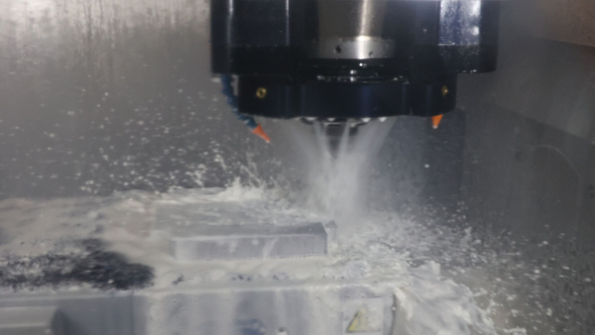 ProLeiS provides a very transparent view of the current status of manufacturing. Planners can see at any time when capacity is still available on individual milling machines. This supports sound decision-making for an optimal manufacturing process. – Image: Pergler Media
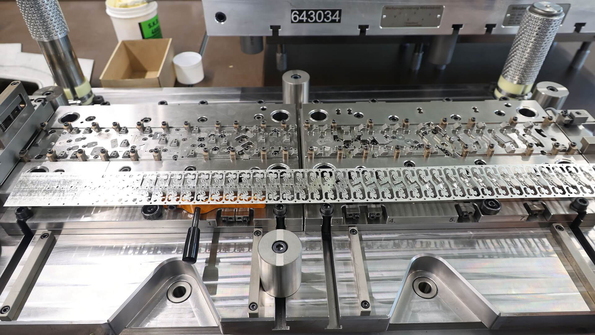 Projects at Weidmüller typically require well-coordinated interaction among different departments. ProLeiS was used for the planning and implementation of this tool too. Getting to the finished product may also require contributions from plastic mold manufacturing and special machine manufacturing. – Image: Pergler Media
Significantly greater flexibility
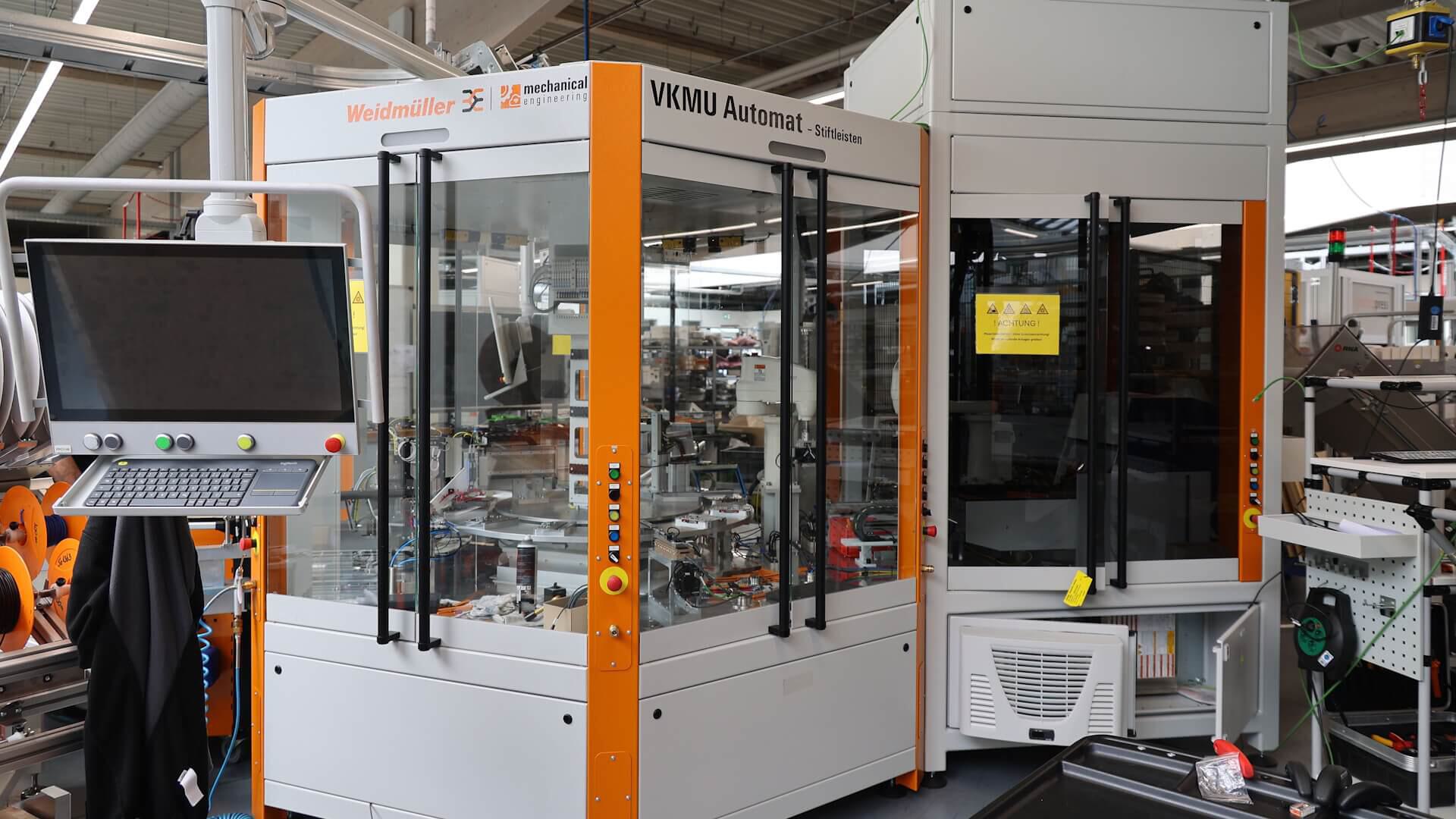
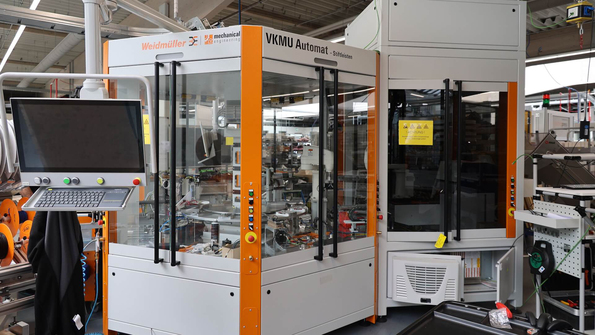 Weidmüller Interface’s special machine manufacturing department makes systems for more than just its own manufacturing: Other companies have also recently begun to benefit from the specialists’ production machining know-how. Some of these tailored systems have already been sold. – Image: Pergler Media
The item database employees have built for standard parts like pneumatic components now contains more than 300,000 different items. Each part is stored along with its supplier, price, delivery lead time, and other data relevant to reliable planning. The item overviews can now generally be obtained in electronic form from suppliers and very easily imported into ProLeiS and parameterized. ProLeiS also supports very easy, transparent recording and tracking for other external services in this system.
Our new approach has significantly increased our flexibility despite—or perhaps precisely because of—standardization in ProLeiS
says Siedenkamp. “The system gives us a highly transparent view of the actual current status of our manufacturing processes. That even allows us to plan the unplannable: If priorities change, ProLeiS gives us very precise real-time information about the consequences of a potential change throughout our manufacturing operations, how we can implement it using our own capacity, and whether we need to outsource work to an external partner. That provides predictability and enables accurate, highly precise manufacturing planning.”
It’s also changing how employees work. “The hardest thing, especially for very experienced planners, is to put complete trust in the ProLeiS system,” says Siedenkamp with a laugh. “But the learning curve was very short, because ProLeiS is so transparent, and today all our planners know they can rely on the information it provides. The new system also introduced some changes for the rest of our employees. For example, bills of materials and routings used to be available in paper form. Now every employee can download the current version to their computer.”Transparency creates opportunities for optimization
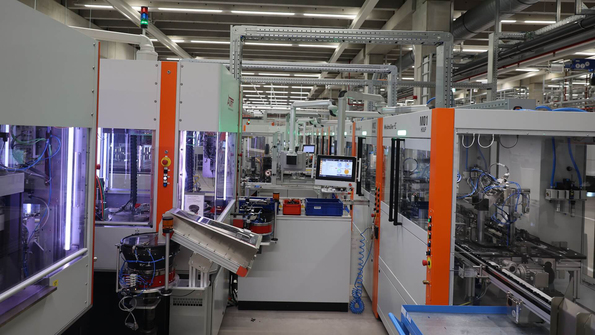 The time and effort required for planning and manufacturing equipment can range from a few days to several person-years. For example, this system can perform stamping operations on the assembly line, eliminating the need to manufacture and feed prefabricated parts separately and making the manufacturing process significantly faster. It involves many different work steps and stations—and thanks to ProLeiS, the manufacturing process will be much easier to plan and manage in the future. – Image: Pergler Media
A high level of transparency is very important—ProLeiS was only introduced a short time ago, but it’s already become indispensable to all of Weidmüller’s planners. This transparency also revealed some surprises:
We uncovered potential in processes we hadn’t expected
explains Siedenkamp. “For example, there were certain reworking operations that we had not been recording. ProLeiS enabled us to make highly targeted optimizations in this regard. The effects were significant: For example, by making improvements earlier in the process, we’ve been able to significantly reduce the number of iteration loops during tryout.”
Bidirectional data transfer between ProLeiS and SAP is currently triggered manually—the data is prepared in such a way as to allow synchronization of the latest status and seamless use in the other system. This ensures the necessary consistency between the two software environments. “At least for now, we don’t plan to fully automate this interface,” says the planner. “With a dynamic system like ProLeiS, you’re never really ‘finished’, but we want to get into more of a routine before deciding whether to automate this too.”Growing together as collaborative partners
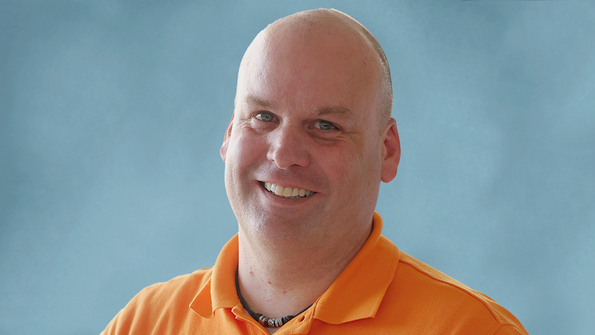 Thomas Siedenkamp, Group Leader Tool Shop Metal at Weidmüller: “If we ever get stuck, we know that our ProLeiS contact partners are very motivated to overcome challenges, learn new things, and enable us to work as effectively as possible. That’s a good feeling—through our work with ProLeiS, we can grow together. And it’s a solid foundation for a strong partnership.”
ProLeiS meets our needs almost perfectly
says Siedenkamp in summary. “Our requests, needs, and suggestions for improvement are incorporated into the ongoing software development. We know that our ProLeiS contact partners are very motivated to overcome challenges, learn new things, and enable us to work as effectively as possible. That’s a good feeling—through our work with ProLeiS, we can grow together. And it’s a solid foundation for a strong partnership.”
The Weidmüller Group
Industrial Connectivity: Electrification, automation, digitalization, electrical connectivity, and renewable energy—Weidmüller is at home in all these markets. Founded in 1850, this family-owned company has manufacturing locations and sales companies in more than 80 countries. As a global player in electrical connectivity, Weidmüller generated more than one billion euros in revenue in the 2025 fiscal year with around 6,000 employees worldwide, including approximately 2,000 at its headquarters in Detmold in the Ostwestfalen-Lippe region of Germany.Focus
Templates
A key advantage of working with ProLeiS is its templates, in which users store all the key parameters a single time during setup. It is a good idea to standardize the relevant assemblies, individual parts, and NC components in advance. These are stored in the system, including the typical machining steps in their manufacture and the resources required for the machining. The standard processes defined in this way are automatically supplemented with the appropriate machines, tools, equipment, and qualifications. The templates automatically take dependencies among machining operations into account. And with just a few parameters, they can be adapted to similar parts that differ in certain ways.Perspectives
Trust the data
In many companies, manufacturing planning is still an area where highly experienced employees mostly have to rely on “rules of thumb” to plan and manage manufacturing. Apart from the problem that this often makes them “indispensable”—it would be best if they never got sick, or even took a vacation—it also often leaves valuable potential untapped, despite their outstanding instincts and lifetime of accumulated manufacturing knowledge. Worse still, this potential can go unnoticed! Optimal decision-making requires a complete picture and knowledge of all the facts. The ProLeiS system can give decision-makers just such a complete picture for planning and control. Of course, ProLeiS has to be set up and, most importantly, continuously maintained— just like any other tool, whether software or hardware. The effort involved is not trivial, but it definitely pays off. If nothing else, it allows planning decision-makers to do their jobs as effectively as possible with confidence. Experience plus intuition is better than nothing—but precise knowledge of the data allows much more reliable planning and implementation!Richard Pergler