


Tebis 4.1 Release 12
Expanded system integration, higher machining quality, and automated processes
Tebis 4.1 Release 12 expands CAD/CAM functionality for integration, machining quality, and automation
Martinsried – 07/15/2026: With the launch of Tebis 4.1 Release 12 CAD/CAM software, Tebis AG offers targeted enhancements of key system integration, CAM machining, and automated job planning functions. The focus is on improved integration with external CAD systems, expanded machining strategies for greater process safety, and new automation functions to reduce the need for manual intervention in NC programming and manufacturing preparation.
The goal is to further improve performance, integrated safety, and the use of existing machines in different manufacturing scenarios.
Integration: Enhanced data continuity with CATIA 3DEXPERIENCE
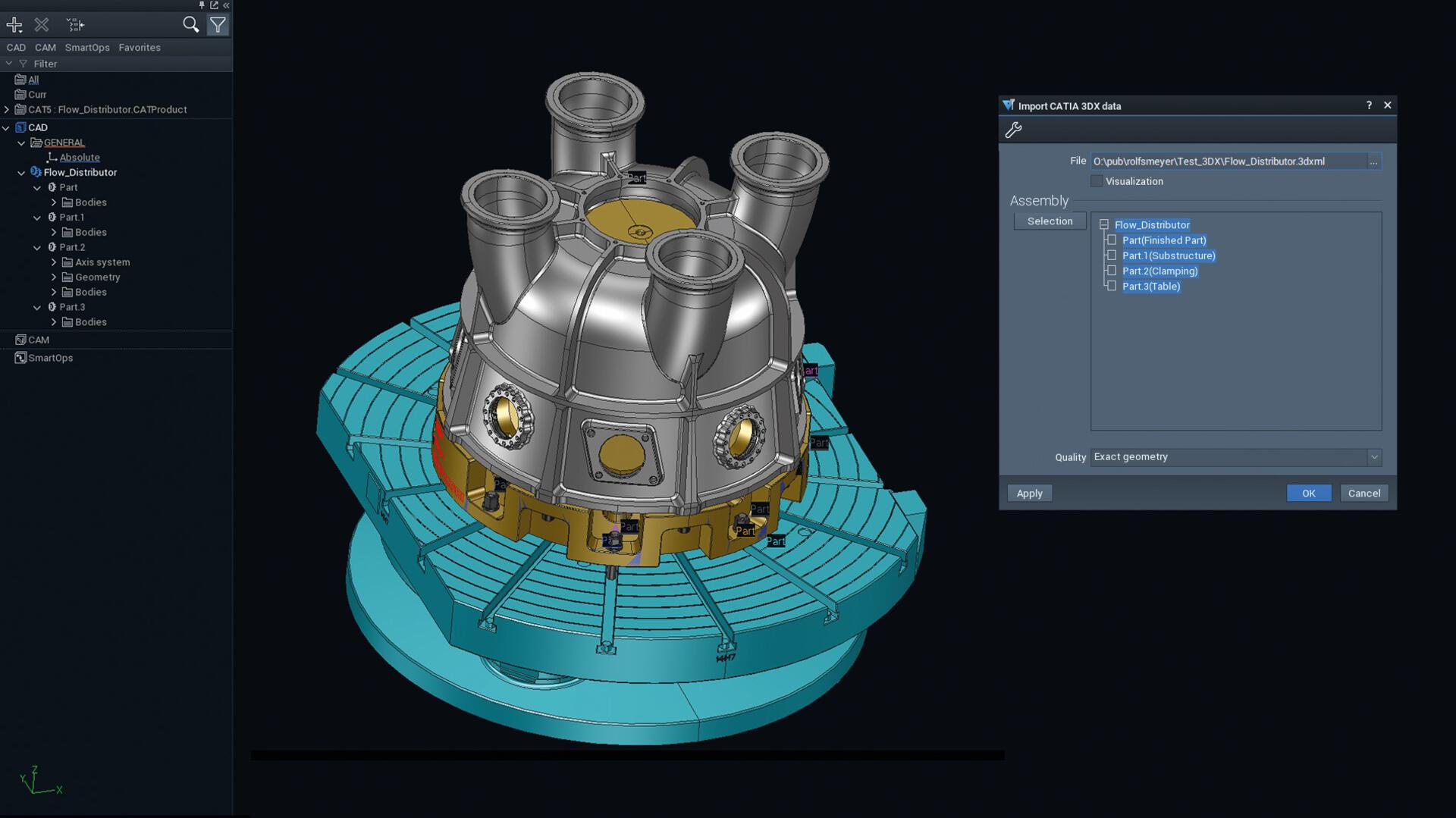
With a new interface for CATIA 3DEXPERIENCE, Tebis now supports direct CAD data import from Dassault Systèmes’ platform in 3DXML format. Functionally, the integration is based on the established CATIA V5 interface, enabling seamless further processing within existing Tebis workflows. This gives users a structured way to integrate CAD data from modern system landscapes into their manufacturing processes without media irregularities.
3D design and SmartOps: Extensions for end-to-end processes
Tebis 4.1 Release 12 includes enhancements of 3D design and SmartOps Technology as well. Model information is now available dynamically, analysis functions can be configured based on context, and geometries can be colored automatically. Overall, this further bolsters the consistency of the data foundation for downstream CAM programming. Design and manufacturing processes are more tightly integrated, supporting automated workflows throughout the entire process.
CAM machining: Expansions for greater process safety and consistent results
For 2.5D and 3D machining, targeted refinements have been introduced to improve machining quality and process safety.
2.5D machining and feature machining
In 2.5D machining, reliefs on cutting edges can be controlled precisely and machined safely with special tools like key (lollipop) cutters. These strategies are designed to remove material efficiently while achieving stable machining results.
The machine head is now checked against defined protected surfaces in feature machining as well. This allows potential collisions to be detected early on, ensuring safe machining from start to finish.
3D milling
In 3D milling, key machining control functions have been refined. Direct definition of the tilt axis in the NCJob, along with standardized projection logic, results in significantly more consistent machining and even better surface quality.
Drilling
For thread tapping, the new “Remove chips” strategy significantly increases the stability of deep thread machining. After each machining stroke, the tool is deliberately retracted out of the bore, chips are removed reliably, and the tool is relubricated if necessary. This enables a noticeable increase in process safety and tool life.
Automation: more efficient NC programming and job planning
Another focus of this release is on automating CAM programming and job planning processes. Rules can be used to automatically sort NCJobs. Programmers still enjoy flexibility when creating machining operations, but the order in which the operations are executed on the machine is optimized for the process—with fewer tool changes and shorter machining times.
In addition, automatic nesting of stanchions and base plates has been expanded. For laser cutting and trimming, parts can be arranged more efficiently, reducing waste and throughput time.
“The demands on manufacturing are increasing, especially where different systems and processes come together,” says Torsten Fiedler, Product Management Team Leader at Tebis, in summary. “With Release 12, we’ve introduced targeted refinements of functions in these areas—from data integration and machining to automated job planning. The goal is to reduce users’ workload while further improving the stability of processes.”
Direct CAD data exchange with CATIA 3DEXPERIENCE: With the 3DXML format, part data can be seamlessly integrated into existing Tebis processes and further processed without media irregularities.
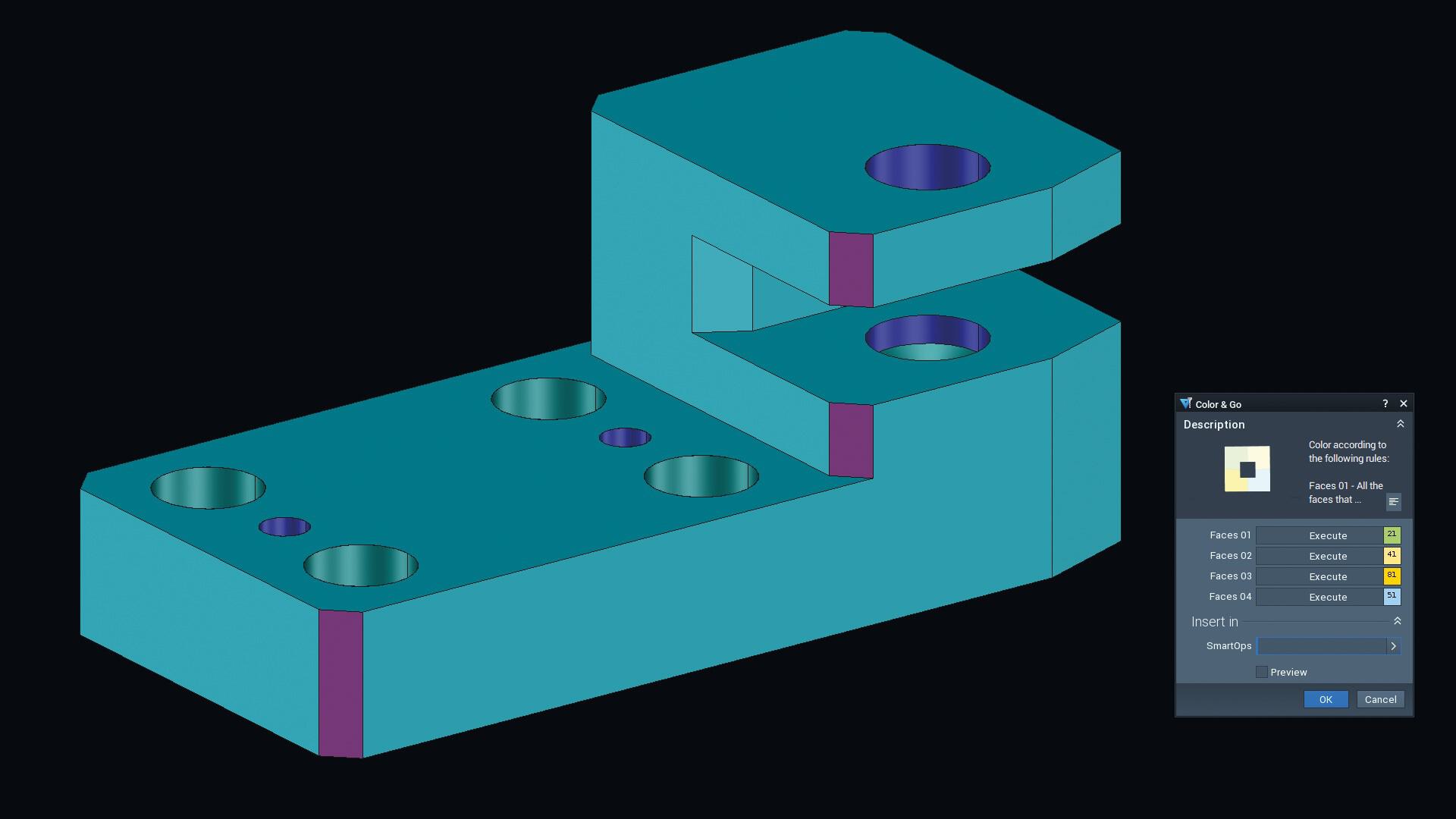
SmartOps enhancements: automated coloring of machining areas as the basis for automated CAM programming.
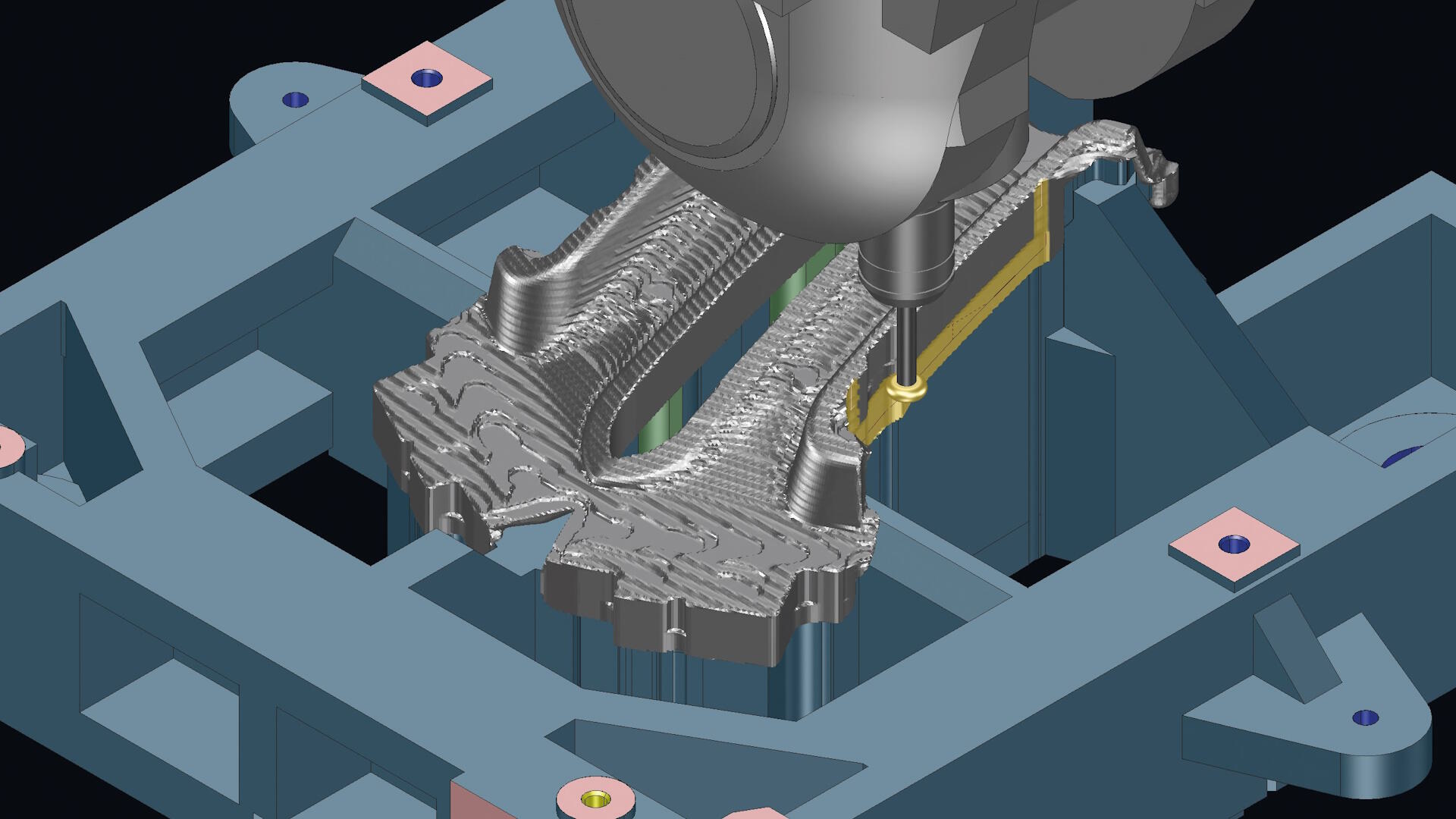
Precise, consistent 2.5D machining of undercuts on cutting edges.
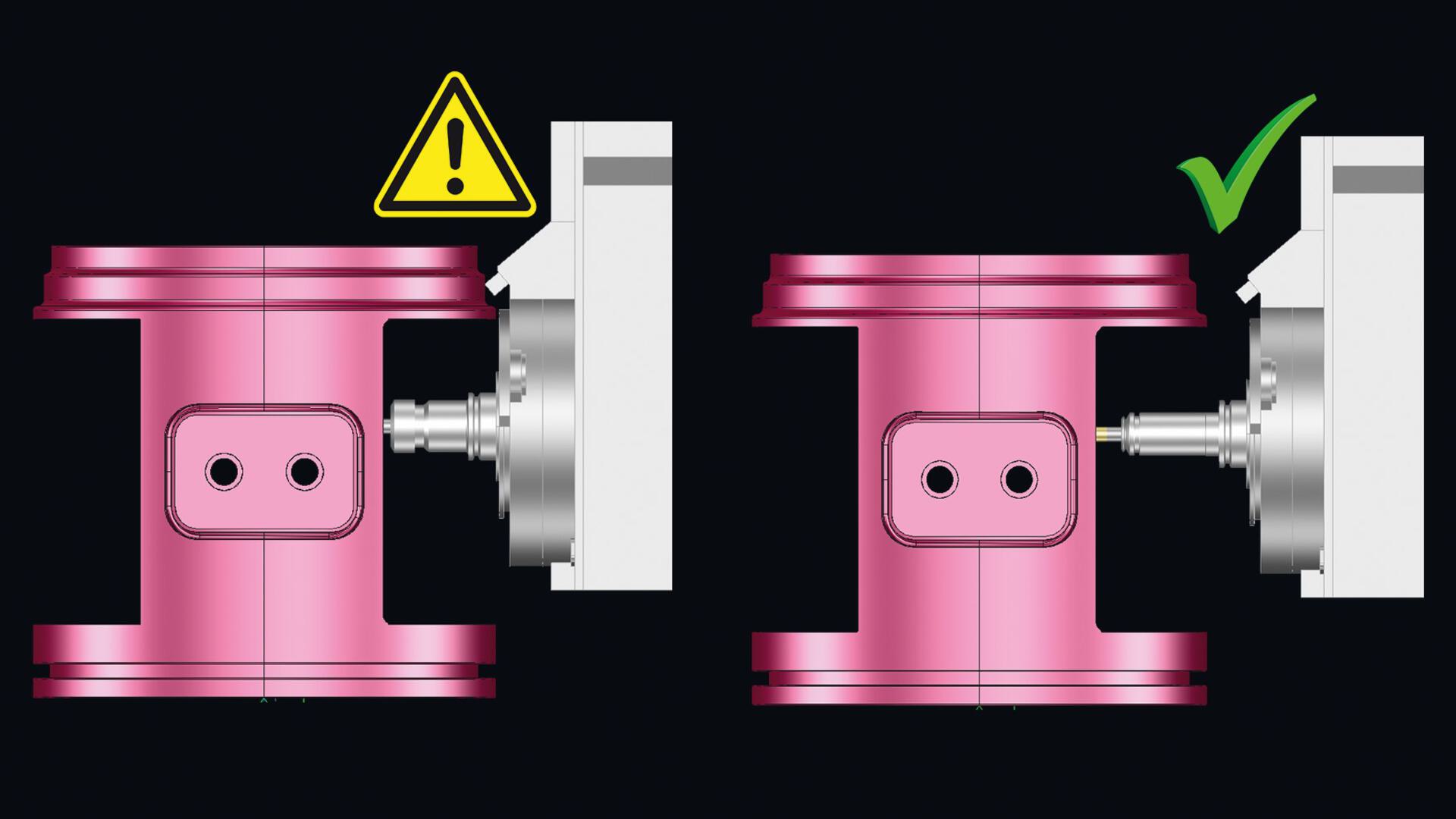
Advanced collision checking in feature machining: The machine head is automatically checked against defined protected surfaces.
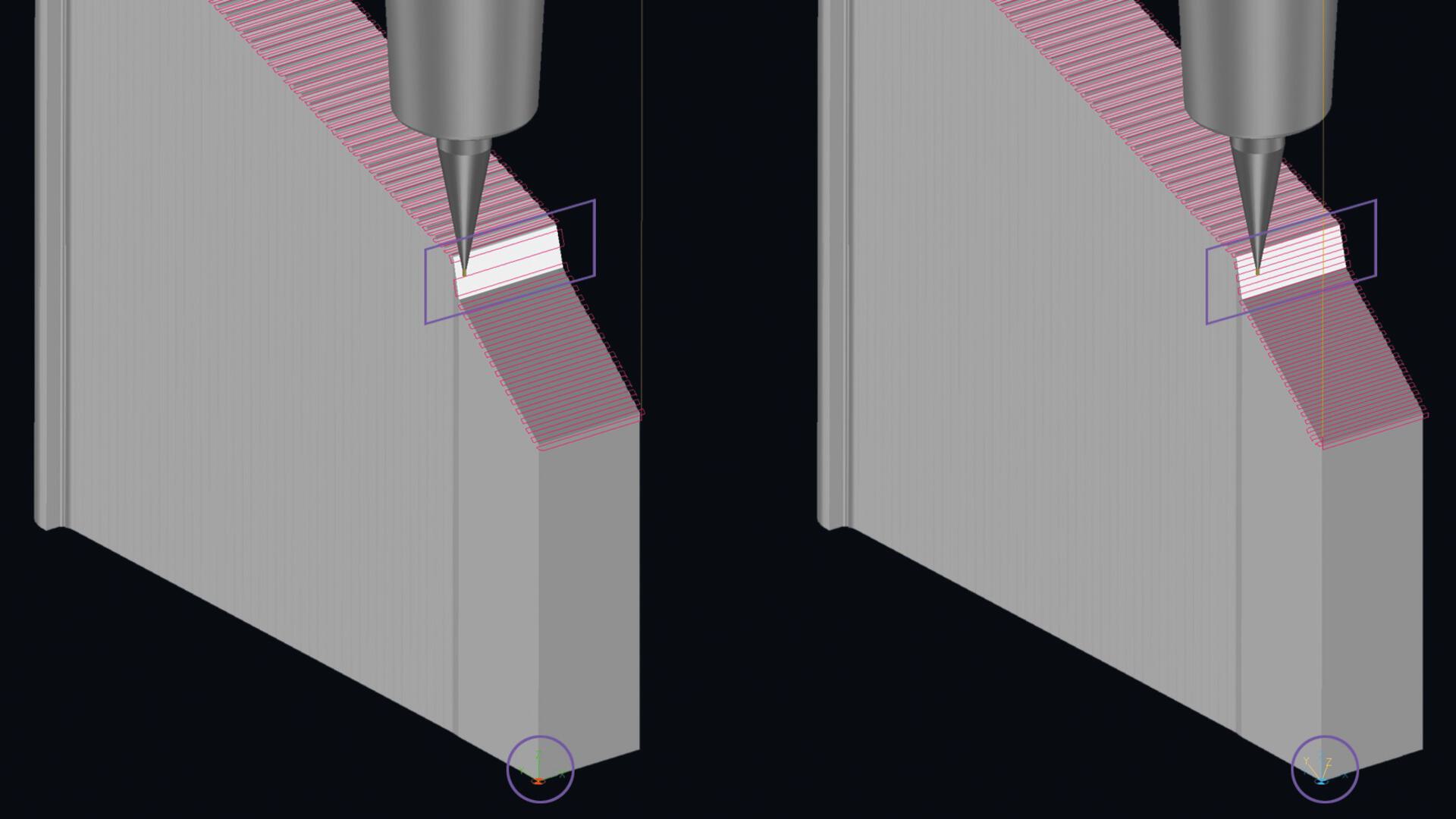
Optimized path layout for 3-axis machining: Toolpaths are adapted to the geometry to achieve stable, consistent machining results.
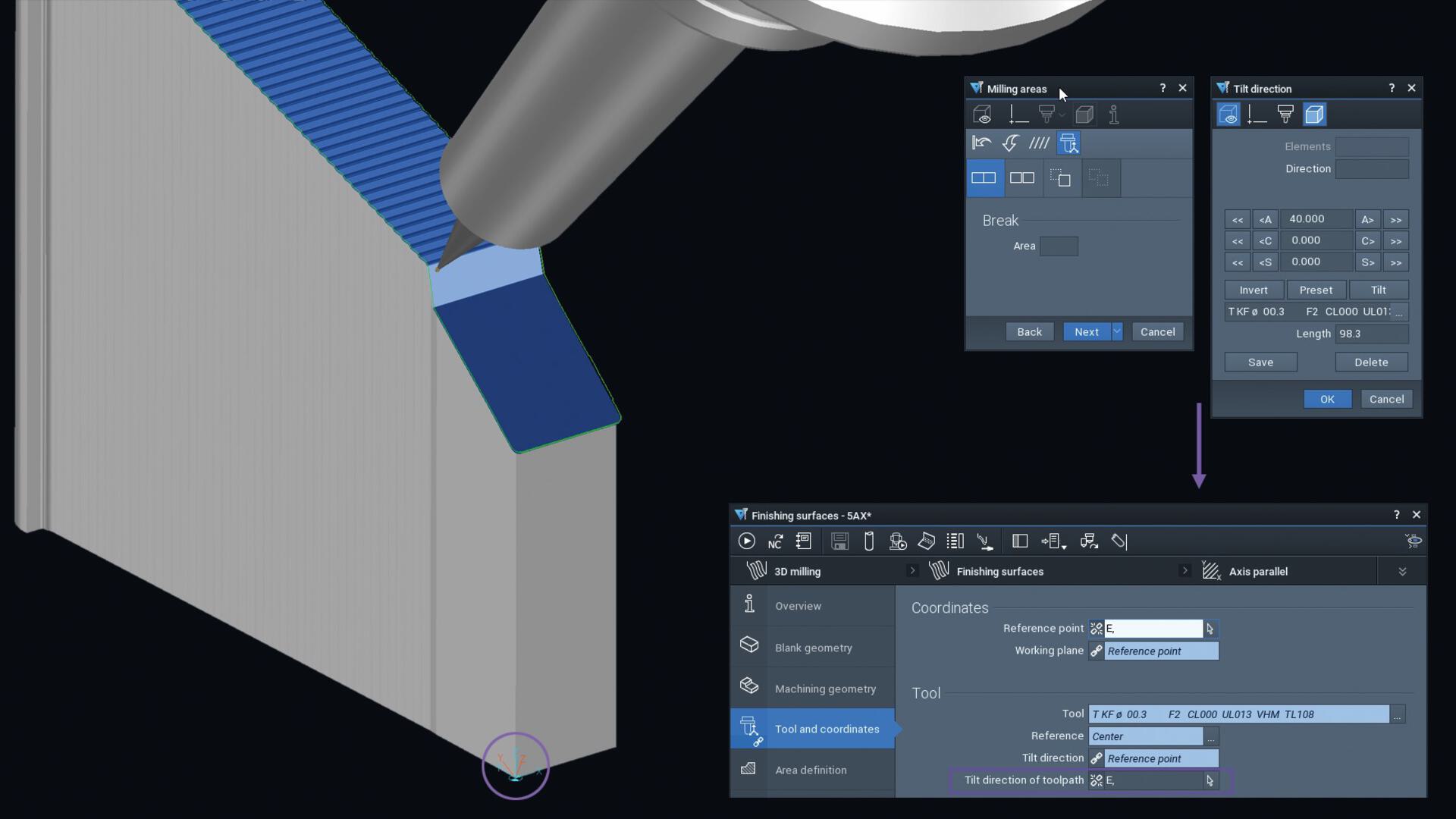
Direct control of the tilt axis in the NCJob during 5-axis machining: The tilt axis can be defined flexibly and remains in the system even after interactive adjustments.
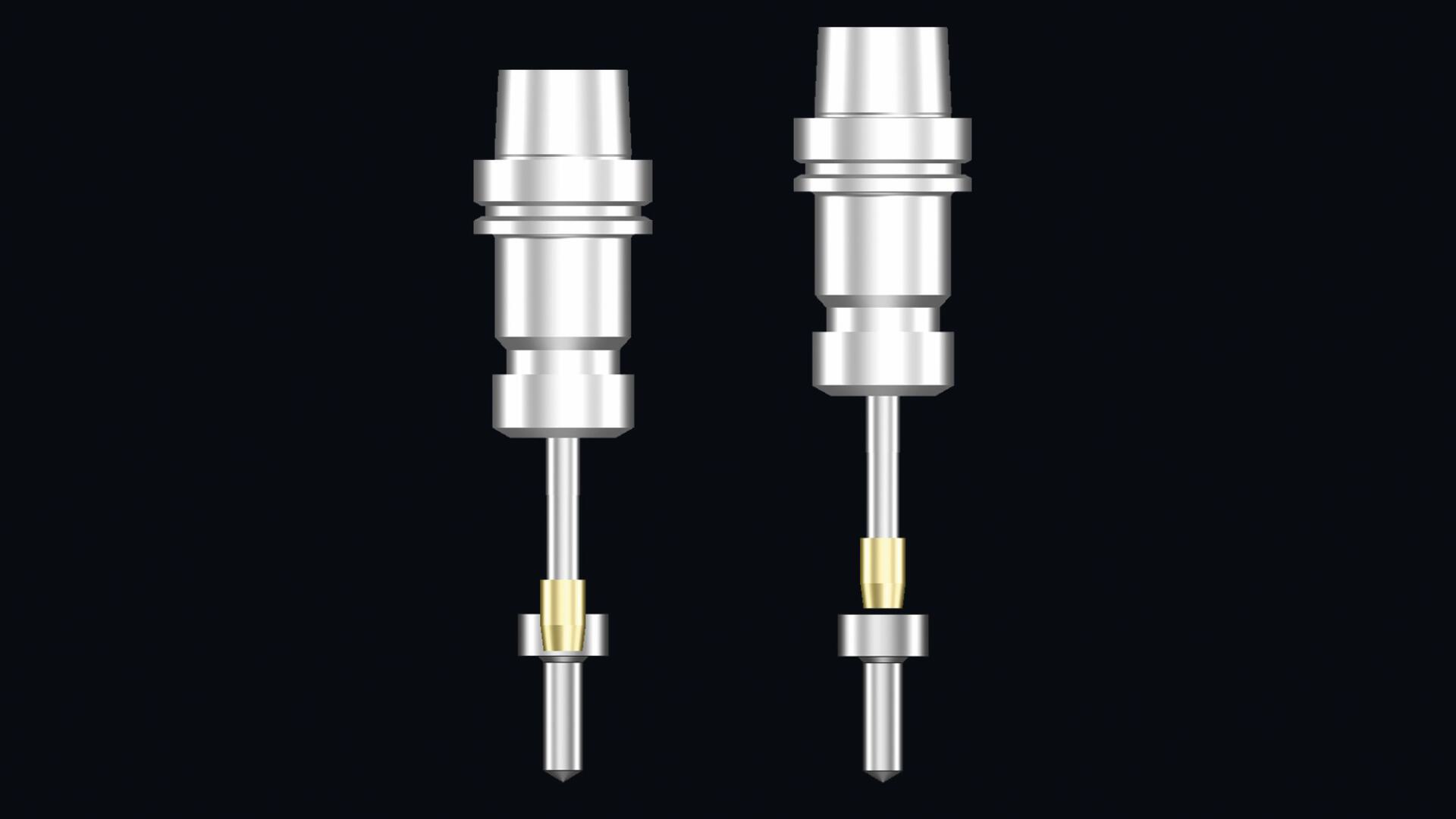
With the new “Remove chips” strategy, the tool is retracted up to the start depth (left) or the start of the drilling (right).
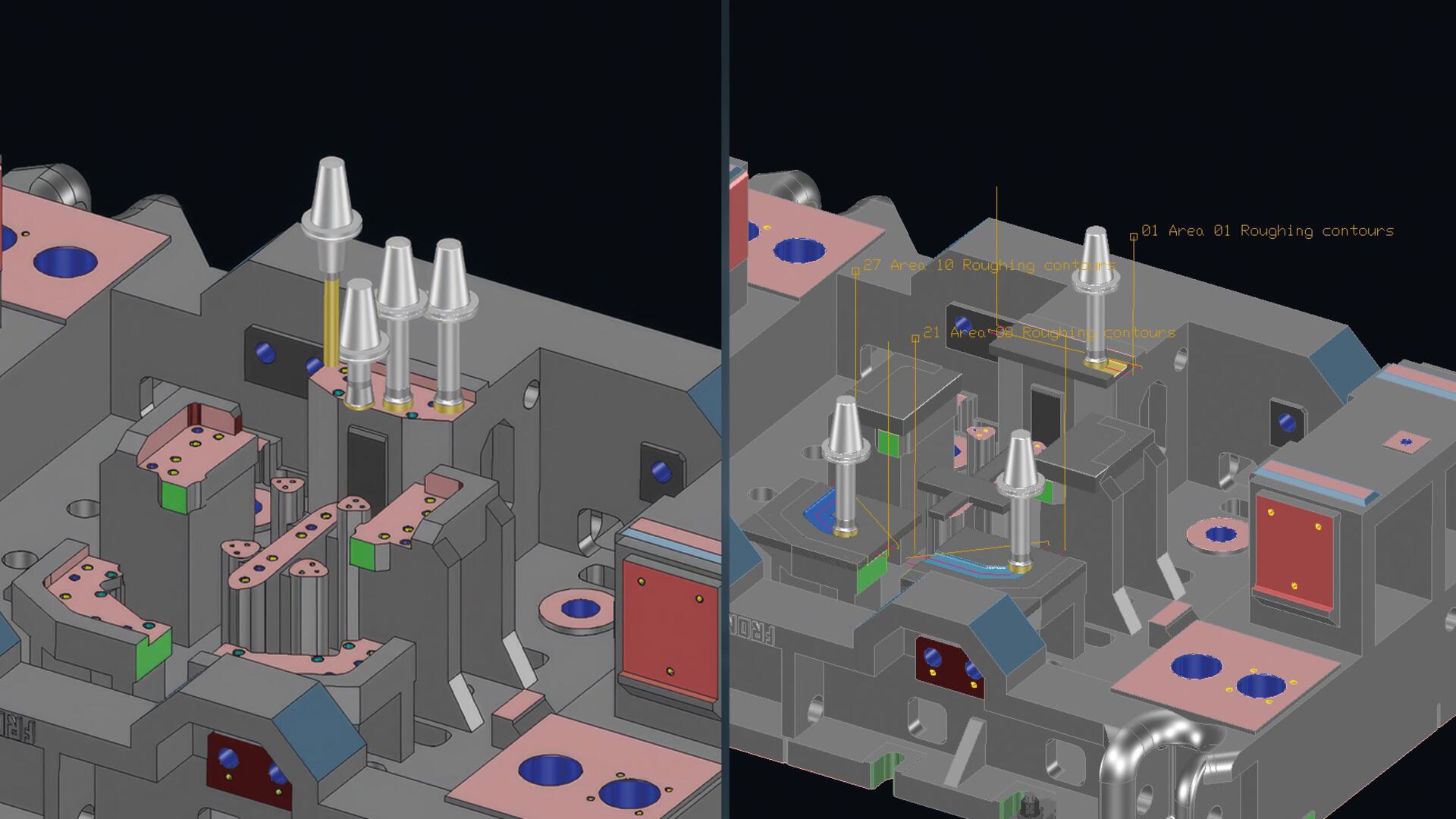
Automated sorting of NCJobs: Programming by area (left) and automatic machine-ready manufacturing (right).
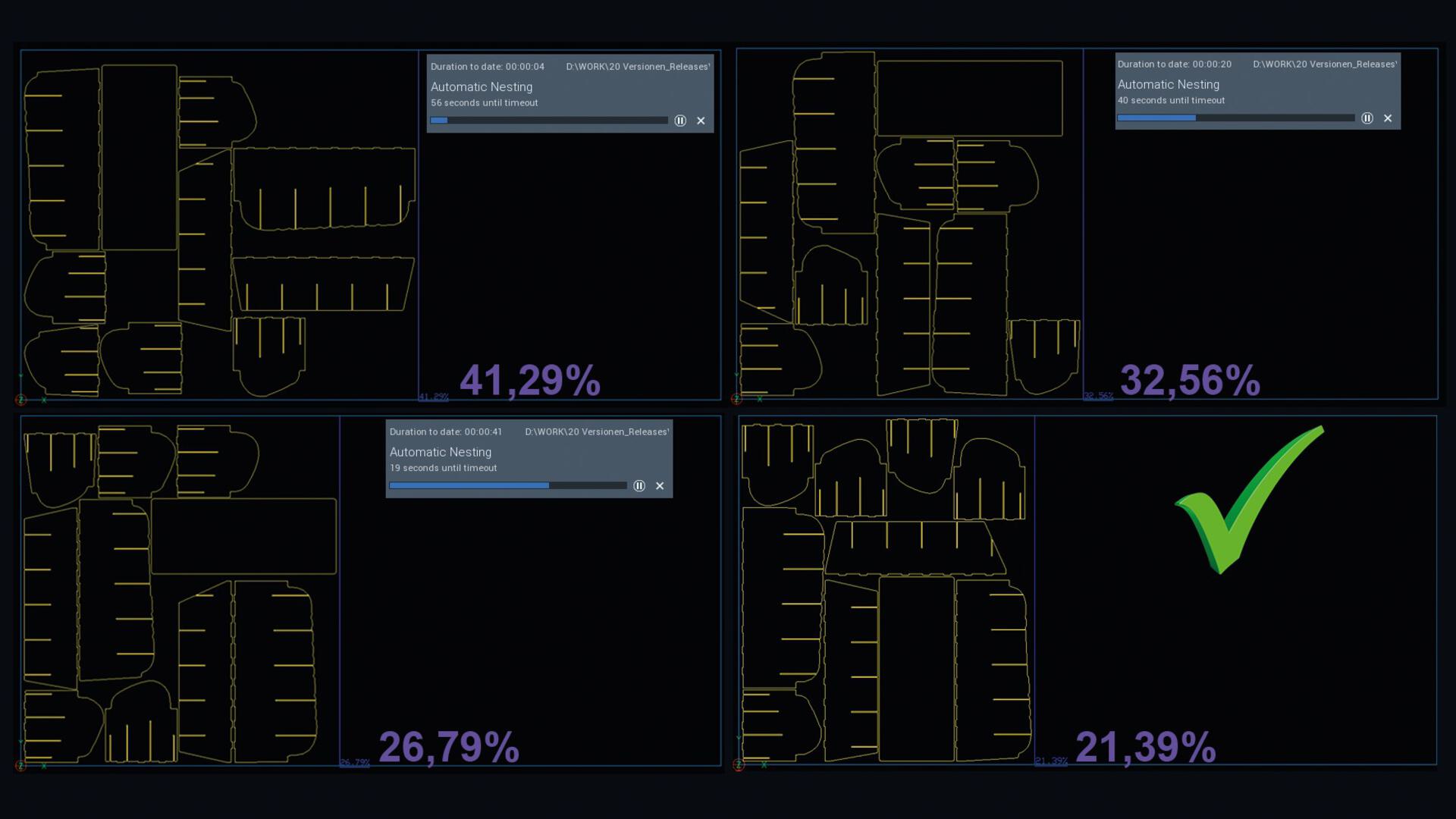
Automatic nesting of stanchions and base plates: Parts are arranged efficiently to optimize material usage and machining times for laser cutting and trimming.