


Automate halfway? Try rowing with one oar.

It's really quite strange. By now, most medium-sized companies have somewhat automated their CAD/CAM processes. However, I notice that their operations still aren’t running smoothly.
Have you also observed red flags like these?
I’m recalling anxious machine operators who tensely monitor production and make changes to preset cutting data and machining strategies; irritated CAM programmers who desperately search for errors they haven't made for the first time; overtaxed production managers who can't find a suitable unoccupied machining center, even though machines are standing idle; and exasperated bosses who get upset in the machine shop because customers have complained of their failure to deliver on time or of poor part quality.
I’ve reflected a lot on this important topic, and I’ll share some of my thoughts with you. Not only is it a shame to waste the enormous potential that lies in automation; it’s also an existential threat.
Half-hearted implementation
I have no doubt: These companies are implementing their automation half-heartedly. That’s why they lack power – just like the rower in the green boat, who’s only rowing with one oar and falls behind his competitors. When I talk about automation, the first step is to combine repetitive activities in the CAD/CAM software in standardized templates to simplify and speed up the entire manufacturing process.
Are you looking for a way to convince your company's skeptics to implement consistent CAD/CAM automation? Then read our useful reasons.
Download useful reasons
Wasted potential
This half-heartedness is especially reflected in three core problems – that all have serious consequences:
- CAM programmers use "their" CAD/CAM templates as isolated solutions, without applying common standards
Consequences: The transfer of knowledge is significantly hindered. New employees have trouble, and their training takes a long time. The results also depend too much on the abilities of individual employees, even for similar parts.
- CAM programs aren’t adapted to the manufacturing environment
Consequences: For example, the CAM programmer uses tools that don't exist in the tool changer on the machine tool – or perhaps the company doesn't even have the tool. The tools are changed on the machine, and the cutting data are changed manually. Or the CAM programmer uses automation to create a "perfect" NC program – that has absolutely no practical application. The operator needs to intervene again and modify the strategies, tools or NC programs to suit the specific machining task. This all costs time and comes at the expense of quality.
- There’s no structure in the manufacturing environment
Consequences: Searching for the right tools and clamping devices, keeping an eye out for unoccupied machines, equipping and setting up machines at the last minute: These unnecessary delays cost money and create stress.
Even if the employees are in top form, conflicts are almost inevitable. The machine operators mistrust the CAM programmers, and the CAM programmers are irritated that "their" programs aren’t used.
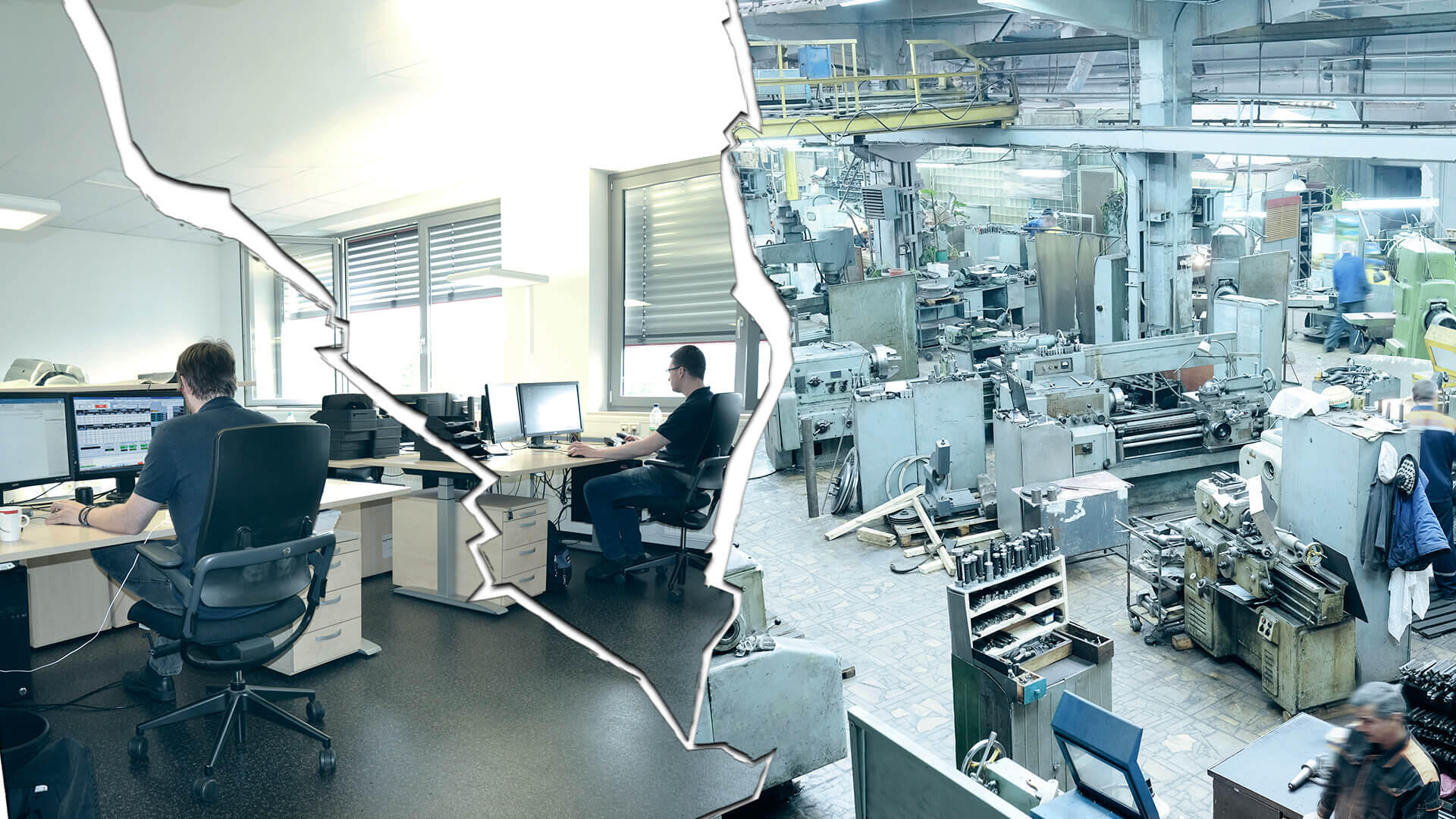
These are concerns that slow down processes
Still, the concerns often outweigh the disadvantages. When I ask decision-makers why they aren't more consistent in implementing automation once they’ve begun, I repeatedly hear concerns like these:
- Too expensive, too time-consuming, too stressful: It's not really worth it for the size of our company. And our geometries are probably too complex for it to work anyway.
- I'm taking too much responsibility away from my employees. It’s demotivating for them. Especially if the automation doesn't work, I've lost a lot of trust.
- And they're right. But the expertise, flexibility and creativity of our employees ultimately reflect the DNA of our company. That's what makes us unique and what sets us apart from the competition. Processes are interchangeable: "Too much" automation moves us toward "average."
- "Safety" and "automatic" are ultimately contradictory. It's like self-driving cars: Although I believe the integrated automatic systems make driving easier, I definitely want to maintain ultimate control.
My conclusion
As understandable as these reservations are: The reasons I cited above make it fatal to not follow through.
Your CAM programmers can use automation to create countless CAM programs, but if templates are not standardized, if the CAM programs don't suit the manufacturing environment, if the manufacturing environment isn’t structured, it will all backfire. The affected employees are dissatisfied, and throughput is no higher than before.
My recommendation
It's not about automating everything. Identify the areas where CAD/CAM automation really pays off. And automate them consistently from end to end. The devil is in the details.
Our blog author:
