


-
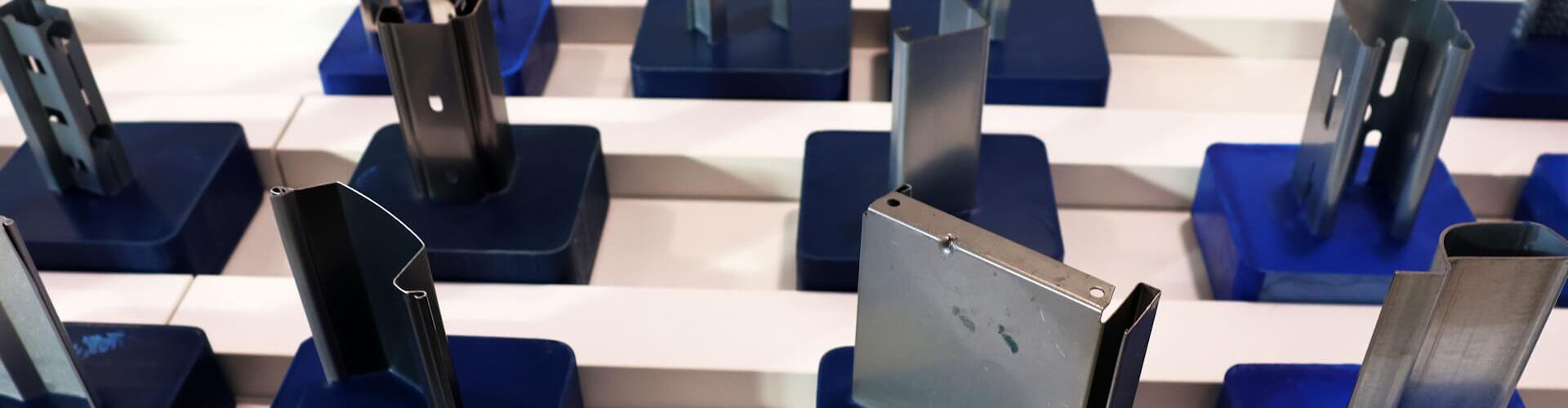
Tebis brings speed and safety to programming at Dreistern GmbH
Automated features handle product variety and complex bores
DSN deals with both small lot sizes and an extremely wide range of variants – a real bottleneck, especially when it comes to bores. With Tebis 4.1, the automated programming drastically reduces time and effort. Bore patterns are now created in minutes instead of hours. The digital twin ensures collision-proof processes and inspires confidence in the NC programs.
Company
Dreistern GmbH & Co. KG
Location
Schopfheim, Germany
Focus
Special machine manufacturing / roll forming systems / roll forming technology
Benefits:
- Automated feature programming drastically reduces effort
- Over 90% time savings for complex bore patterns
- 20–40% less programming time in total
- 80–90% less prove-out time
- Digital twins ensure collision-proof manufacturing
- Libraries and NCSets enable standardized processes
Sector
Machinery and equipment
Published
2026

Interviewee: Ralf Schinzig, Head of Manufacturing Planning and NC Programming
With TXB, we program complex bore patterns more than 90% faster. In total, we are able to reduce programming time by 20% to 40% and prove-out time by up to 90%. This creates reliability – and genuine confidence in our NC programs.
Ralf Schinzig, Head of Manufacturing Planning and NC ProgrammingDreistern GmbH & Co. KGDreistern, a specialist for high-end roll forming solutions, saves a great deal of programming time through intelligent use of the Tebis 4.1 CAM system and optimizes process safety more or less as a side effect. In mechanical engineering components, large numbers of bores with very different designs are one of the great challenges for efficient, largely optimized, and collision-proof programming of the parts. These are mostly manufactured by employees in small lot sizes for customized systems.
At the Dreistern company, experienced specialists create and manufacture high-end roll forming solutions for a wide variety of industries – from the transport and logistics industry to the automotive and electrical sectors, up to applications in the construction sector.
The experts from Schopfheim, located at the edge of the High Black Forest, have built more than 2,000 roll forming machines worldwide since the company was founded in 1949.
More than 10,000 different profiles are manufactured from metal materials on the machines.
The processed metal strips are normally between 0.2 and 5 mm thick. However, in specific applications, users can also form thicker strips with Dreistern machines.
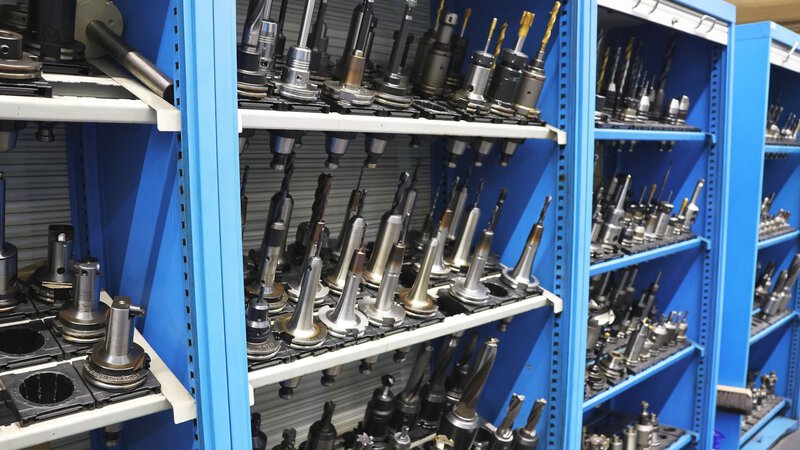 The machining tools at Dreistern are largely standardized. The employees at Dreistern have set up an extensive tool library from which the CAM software selects the right tools for the features in the design data when creating the programs. – Photo: Pergler Media
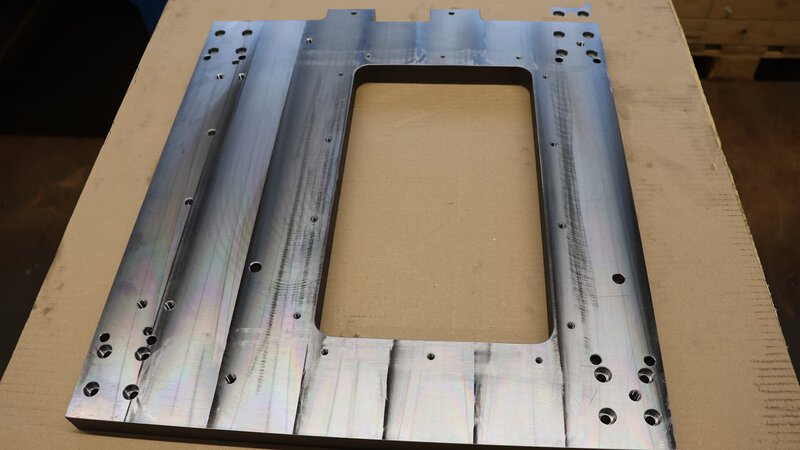 The geometric design of the machine parts at Dreistern is straightforward. However, the machine's numerous components are available in a wide range of variants, each precisely tailored to the specific application. – Photo: Pergler Media
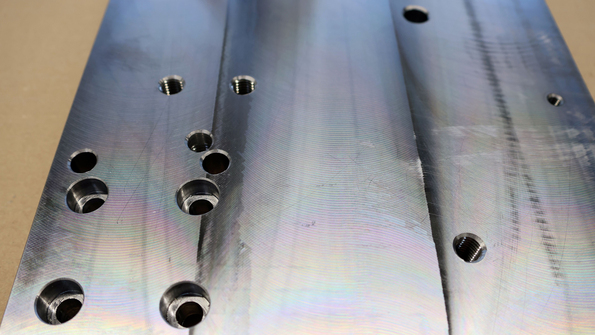 It is hard to believe how many different bore variants a single design can contain – despite the greatest possible standardization. This variety is a challenge for programmers – it’s actually a routine task, but one with no room for error. – Photo: Pergler Media
Among other factors, the highest precision, maximum robustness, and outstanding user-friendliness are important for the design of the machines – after all, they are used worldwide.
With their extensive range of sophisticated and time-tested manufacturing solutions, the company’s approximately 175 employees aim to reduce users’ downtime and scrap to an absolute minimum, thereby ensuring high efficiency and cost-effectiveness.
A complete provider with comprehensive expertise
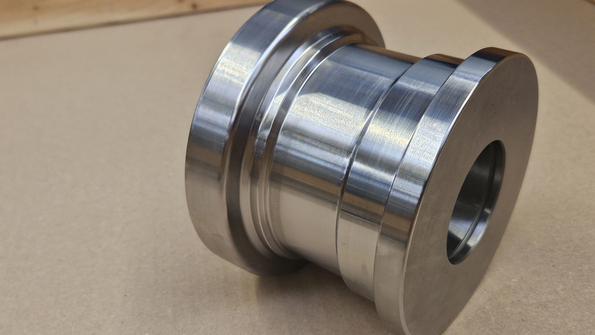 The rolls of the roll forming tools are made from various materials. Dreistern also processes ultra-high-strength and extremely hard materials. And where machining with defined cutting edges reaches its limits, the machinists rely on grinding. – Photo: Dreistern
The company from Schopfheim regards itself as a complete provider. The range of services extends from support with production-oriented optimization of the final product to be manufactured, to customized design of the machine, the mechanical engineering including machining of the required components, and design and manufacturing of the roll forming tools, up to turnkey handover and commissioning at the customer’s site.
An optimum roll forming machine is not an off-the-shelf product,
emphasizes Ralf Schinzig, Head of Manufacturing Planning and NC Programming at Dreistern. “Our machines are extremely precise and individually tailored to the desired application and the user’s specific product to achieve the highest quality. And each system requires a large number of components, which are frequently similar but then often differ considerably from each other in the details.”
A wide range of applications
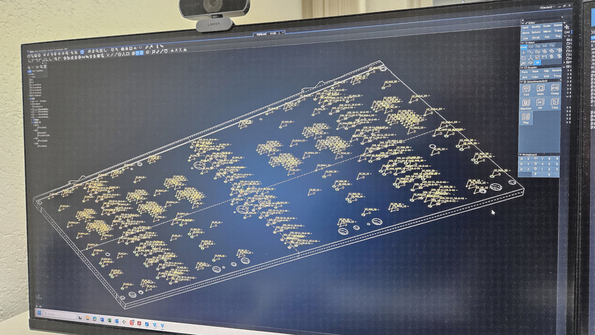 The feature detection from the design data and the automated programming allow bore patterns to be programmed quickly and safely. In total, the experts at Dreistern reduce programming time by around 90% with feature detection from Tebis. – Photo: Dreistern
The applications of roll-formed profiles exhibit impressive variety. They range from door frames to profiles for thermal insulation in modern windows, auto body components, slide rails for cabinet drawers, and cable ducts in switch cabinet construction up to a wide variety of shelf construction components in warehouse logistics. Exotic applications are also possible, such as composite profiles or foam-filled roller shutter profiles, for example.
This is also reflected in the materials that the users can form on the systems: High-strength and ultra-high-strength steel qualities, aluminum alloys, and other materials such as copper. There is hardly a formable material that has not already been processed on a Dreistern roll forming system. The materials from which the rolls of the roll forming tools, for example, are made are also equally diverse..We also machine ultra-high-strength and extremely hard materials in our manufacturing,
explains Schinzig. “And where machining with defined cutting edges reaches its limits, we rely on grinding.”
Digitalization safeguards processes
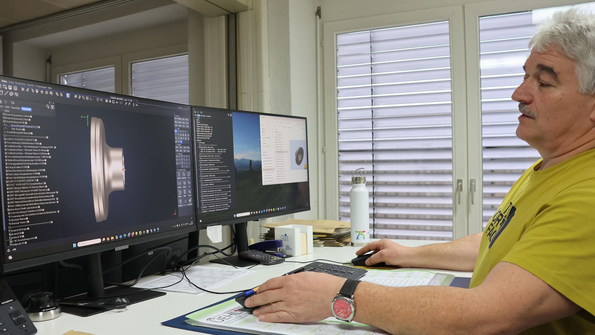 Around 8,000 programs have to be created for forming rolls each year. The rolls are each specifically coordinated with the profile to be formed. Tebis ensures that collisions are prevented and the machine operators can rely on the quality of the programs. – Photo: Pergler Media
The Dreistern experts have been working on the practical use of digitalization and automation for the roll forming process for several years. In connection with precise mechanical engineering, this opens up numerous options for a manufacturing process that is efficient, and thus also stable, with a high level of user friendliness.
In addition to mastering forming processes and developing assistance systems, the objectives of digitalizing the roll forming machines include high flexibility in the face of decreasing batch sizes and a comprehensive quality assurance (now with automatic correction on the machine in individual cases) and maximum system availability.
Artificial intelligence (AI) is also becoming increasingly important in this context for supporting users – as a long-term objective for the future, as well as for automated correction and control processes.
Digitalization of the manufacturing strategy
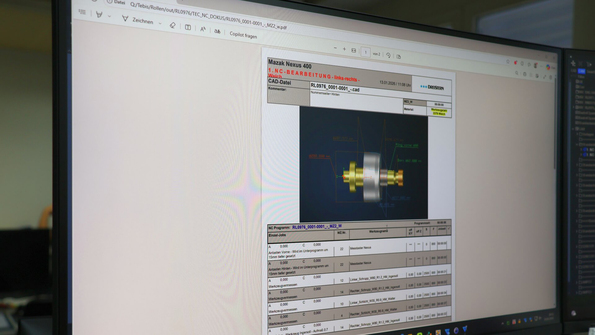 The machine operators in Dreistern’s production department have a great deal of confidence in the Tebis programs. They allow the company to achieve significant savings on setup and prove-out times as well. – Photo: Pergler Media
Digitalization also plays a major role in Dreistern’s own manufacturing.
Especially in light of the wide variations among our products, the CAM system plays a central role in our manufacturing strategy,
explains Schinzig. “We design with Inventor. In our NC programming, we relied for many years on a system that is widely used in the industry, which we had also extended with a few functions to meet our needs. The disadvantage: Whenever an update came, our extensions often no longer worked.”
This was particularly true for mapping specific machining strategies, in which the software specialists at Dreistern had invested a great deal of effort. Another disadvantage: Simulations ran via external solutions – and generally only reflected the state prior to the postprocessor run. “Looking back, it’s clear – the CAM system we used at the time didn’t really suit our portfolio. For us, this demanded a reorientation. We needed a solution that was future-proof, reliably reflected our needs, and would continue to provide the necessary capabilities with every subsequent upgrade. A few years ago, we set out to find one and evaluated numerous CAM systems from a wide variety of manufacturers.”Complex geometries are not the problem
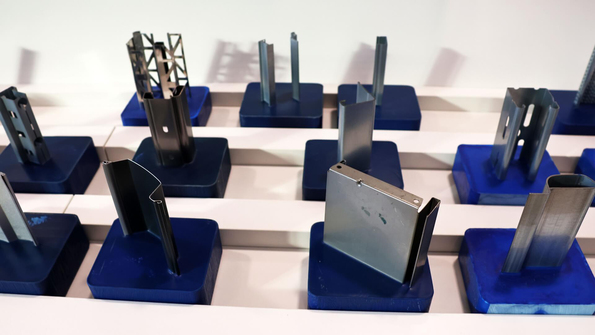 On Dreistern systems, more than 10,000 different profiles are typically manufactured from metal materials. The processed metal strips are generally between 0.2 and 5 mm thick, although users do sometimes form thicker strips as well. – Photo: Pergler Media
The demands that the workpieces made of the CAM system had less to do with geometric sophistication: “Free-form surfaces, for example, are rarely required in our mechanical engineering,” reports the Head of Manufacturing Planning and NC Programming.
The geometric design of our machine parts tends to be fairly straightforward. Instead, we must be able to handle a wide range of variants for the numerous parts of our machines, each of which is precisely tailored to the specific application. Our machining covers the entire spectrum, from 20 x 20 mm small parts to 8 m long welded structures.
One major challenge is also the numerous different bores with varying fits and custom threads. “These are parts that often only differ in their bore patterns,” Schinzig explains, “or that are installed symmetrically in our machines and therefore require left-hand and right-hand threads to prevent the connections from accidentally coming loose. And as if that weren’t enough, we also manufacture machines with inch-based thread sizes for our customers in various international markets. It’s hard to believe how many different bore variants a single design can contain – despite extensive standardization. This variety is also a challenge for programmers – actually a monotonous routine task, but one with no room for error.”
Flagship project shows the way
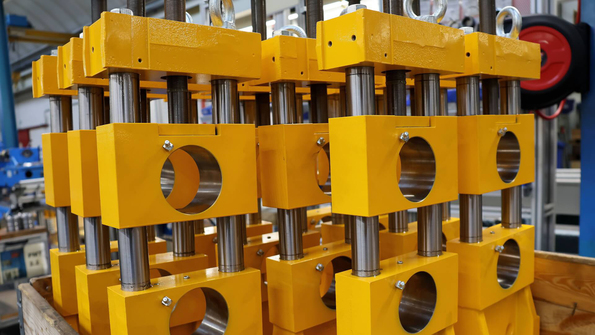 For some mechanical engineering components, there are also larger lot sizes. However, most of the key components for the roll forming machines, which are custom-tailored to their specific applications, are very individualized and often have to be manufactured in lots of size one at Dreistern. – Photo: Pergler Media
In addition to various CAM solutions – including the latest version of the previously used system – the CAM experts at Dreistern also took a closer look at the Tebis package in the latest version 4.1. “In the brochures and on the websites, all CAM systems look good and make great promises,” observes Schinzig. “The suppliers promise a lot – but what they can deliver only becomes clear through practical experience. That’s why we thoroughly evaluated the systems we were considering in a flagship project. After all, if we’re going to spend money on a CAM solution, the system has to be exactly right for us over the long term.”
Most of the systems already failed when their interface with Inventor was considered. “The machining information that the design department had provided with its data could not be correctly imported into most CAM systems,” explains Schinzig.Tebis was the notable exception in this regard. And since it met our other key criteria very well, we launched our pilot project – initially for milling using a duoBLOCK machine from DMG Mori with a Heidenhain 530 control system.
Setting up the NCSets and libraries
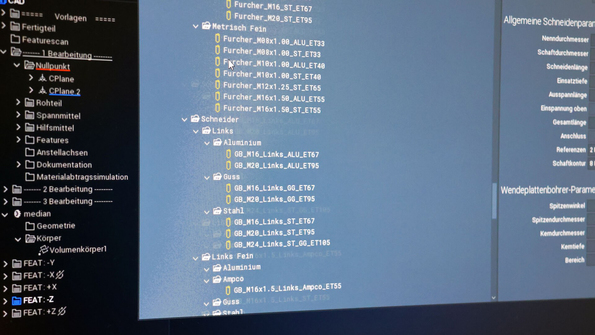 The tool libraries, in particular, are very comprehensive – they include not only the geometric data for the cutting edges, but also the optimum cutting parameters for the different materials. Considering the wide variety we handle at Dreistern, that is a real challenge. – Photo: Pergler Media
The employees received training, and the Dreistern team set to work creating NCSets and libraries together with the experts. “At the outset, this requires a tremendous effort,” admits the Head of Manufacturing Planning and NC Programming. “The tool libraries, in particular, are very comprehensive – they store not only the geometric data of the tools, but also the optimum cutting data for the various materials. Considering the diversity we deal with, that’s a real challenge.” The clamping devices were also fully documented in a library, and a Tebis team precisely remeasured all machines that use Tebis programs.”
The great advantage is that all relevant manufacturing knowledge is now directly represented in Tebis through the NCSets and the libraries – so we can be sure that what we see in our simulations using the actual data will match reality,” emphasizes Schinzig.Simply put: Since we’ve been using Tebis, we’ve been collision-free. The precise measurement of the machines, which a team of experts from Tebis did for us, is extremely important – the details matter. For example, the cooling lubricant tubes for the external coolant supply are not always arranged as depicted in the manufacturer’s data model. If you want to be on the safe side, there’s no alternative to exact measurement of your machines.
Machine operators trust the programs
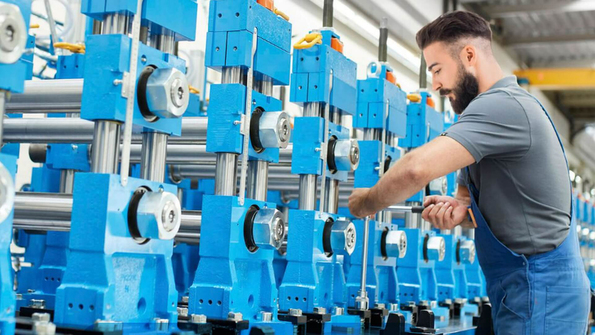 The experts at Dreistern build roll forming machines that enable users to produce various profiles, typically from metal materials, for a wide range of applications and industries. The metal strips processed with these machines are typically between 0.2 and 5 mm thick. – Photo: Dreistern
The programmers now supply Tebis programs to the machinery, which includes various milling machines, lathes, and roll-turning machines. Dreistern requires approximately 8,000 programs per year for rolls alone. For all of this, Schinzig and his team have worked with Tebis experts to establish sustainable processes. “Everything runs smoothly; even the installation of new software releases is no longer intimidating, since Tebis is completely update-proof with respect to our data,” confirms Schinzig.
We’ve taken a major step forward with the automated programming of features. When you have a plate with up to 400 bores, manual programming is no fun; it’s time-consuming and feels like it takes forever.
With the feature recognition from the design data and automated programming, such a bore pattern can now be programmed in around five minutes, reducing the programming time by over 90%. “This is great progress; in total, we’ve cut our programming time by around 20 to 40 percent,” Schinzig emphasizes. “And it provides certainty – if Tebis says the program will run, then there will be no problems. Our machine operators now have a great deal of confidence; they’re happy with the Tebis programs. This allows us to save an additional 80 to 90 percent on prove-out time compared to the old CAM system. “
A partnership of equals
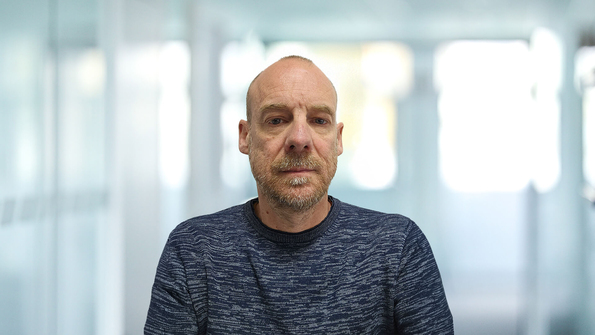 Ralf Schinzig, Head of Manufacturing Planning and NC Programming at Dreistern: “Tebis listens to our requests and needs. For example, when we needed functions for trochoidal turning that weren’t already available in the software, the Tebis experts listened to us very carefully. And the function was integrated in the next release in a way that was update-proof and available to everyone.” – Photo: Dreistern
The programmers also appreciated that they were not forced to use one standardized way of working.
The Tebis experts closely examined how we work, showed us what could be optimized, and then mapped our workflow into Tebis,
says the Head of Manufacturing Planning and NC Programming. He is also enthusiastic about the ability to measure during the process: “If a welded part happens to be longer than specified in the plan, Tebis can detect this and correct it during machining,” he explains. “The control system of our old machine didn’t support measurement cycles – Tebis was able to offer us a solution that allows us to align workpieces quickly and easily.”
The collaboration with the experts at Tebis is very much based on partnership in other respects as well: “They listen to our requests and needs,” emphasizes Schinzig. “For example, when we needed functions for trochoidal turning that weren’t already available in Tebis, the Tebis experts listened to us very carefully. These functions were then integrated in the next release in a way that was update-proof and available to everyone. By the way, another important factor for realizing our full potential is ongoing training for our employees. That’s why Tebis training courses are regularly included in our schedule. All in all: Our relationship with Tebis is a genuine partnership. It’s hard to overstate how valuable that’s been.”Profile
Dreistern GmbH & Co. KG
As one of the world’s leading suppliers of customized roll forming machines, Dreistern is a significant driver of technological progress in this area. The experts have built more than 2,000 roll forming machines worldwide for a large variety of industries – and have repeatedly met specific customer requirements with their in-depth expertise. Among other benefits, Dreistern promises the highest precision, maximum robustness, and an outstanding level of user-friendliness for its machines. In this way, the roll forming specialists minimize downtime and scrap – relying on sophisticated and time-tested solutions from the company’s extensive product range. Dreistern employs approximately 175 people.Focus
NCSets
For all features and other frequently recurring manufacturing processes, Tebis integrates standardized manufacturing sequences into an NCSet library. NCSets consist of several interconnected NC calculation functions with specific information on strategies, tools, and calculation parameters. Users can add to their NCSet library on their own at any time as needed, thereby further expanding their opportunities for automatic programming. NC programming via NCSets runs largely automatically for recognized features such as bores, pockets, or threads. This allows the user to save a great deal of time on programming and to increase safety, thanks to validated standards and avoiding sources of error.Perspective
Trust drives productivity
Programs created with Tebis are collision-free – and machine operators at Dreistern have learned to rely on this. Thanks to consistent simulation in the CAM software, programmers at Dreistern can not only consistently avoid scrap but also make their manufacturing process considerably more efficient. The certainty that the programs are suitable allows machine operators to dispense with the typical safety margins that often prevent them from fully utilizing the feed rates that the tool and machine are capable of for optimal machining.Richard Pergler


